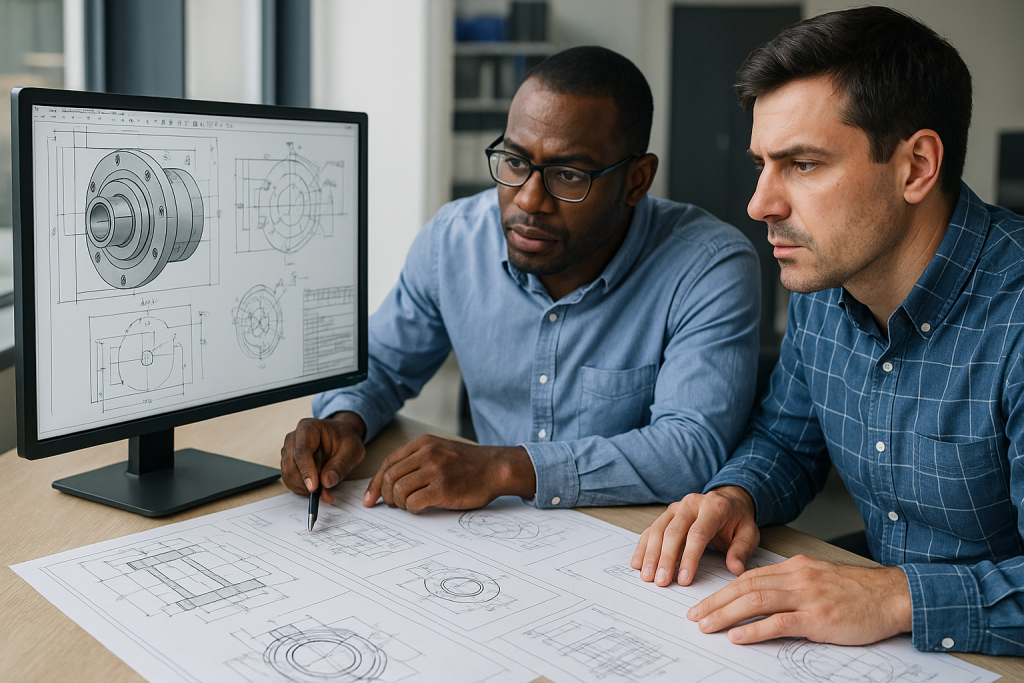
Since I started in the custom parts industry back in 2001, I’ve seen countless brilliant engineering designs hit a massive roadblock the moment they reach the manufacturing stage. The prototype looks perfect on a CAD screen, but when it’s time to actually cut metal, the costs skyrocket and lead times stretch into weeks.
If you are a B2B buyer or a lead engineer, you already know the frustration of delayed timelines and blown budgets. Often, the culprit isn’t the design itself, but a disconnect between the design phase and the realities of the shop floor.
At BOONA Prototypes, my team and I spend our days bridging that gap. Based on our daily work with clients ranging from medical device startups to automotive suppliers, here is what you need to know to keep your machining costs down without sacrificing an ounce of precision.
The True Cost of “Over-Tolerancing”
One of the most common issues I see when reviewing a 3D model is a blanket tight tolerance applied to an entire part.
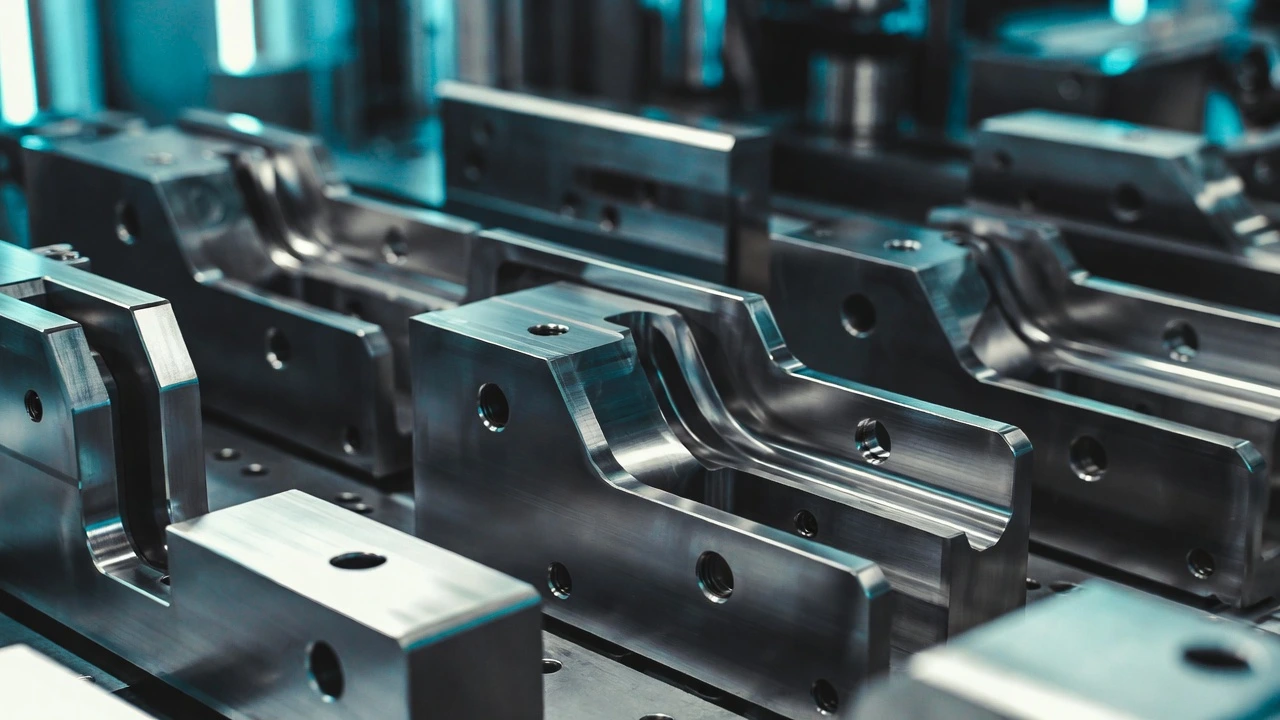
Let’s say you are working with tough materials and need [stainless steel CNC machined parts]. If you call out a ± 0.01 mm tolerance on a surface that just sits in open air, you are forcing our machinists to slow down the feed rates, use specialized tooling, and perform multiple CMM (Coordinate Measuring Machine) inspection passes. All of this adds hours of labor.
The fix: Only apply those ultra-tight tolerances to critical mating surfaces or press fits. By relaxing non-critical dimensions to standard tolerances (like ± 0.05 mm or ± 0.10 mm), you instantly cut down on cycle times. Our engineering team provides a free Design for Manufacturability (DFM) analysis with every quote within 2 to 4 hours, specifically to help you spot these cost-saving opportunities before you spend a dime.
Material Selection: Don’t Pay for What You Don’t Need
Another area where budgets bleed is material choice. I frequently see requests for aerospace-grade titanium or high-end PEEK plastics for internal components that don’t face extreme temperatures or corrosive environments.
If you are looking for [affordable low-volume manufacturing] to test a market, selecting an easy-to-machine aluminum alloy or a standard ABS plastic can slash your material and machining costs by half. Once the design is validated, we can easily pivot to more robust materials. Because we operate with absolutely NO MOQ (Minimum Order Quantity), we can run a single test part in aluminum and later scale up to a 10,000-unit run in 316L stainless steel seamlessly.
Consolidating Your Supply Chain
Nothing kills a project timeline faster than shipping parts all over the globe for different stages of production. Having one shop handle the machining, another handle the plastic components, and a third handle the anodizing is a logistical nightmare.
This is why we’ve built BOONA into an ISO 9001-certified hub that handles the entire lifecycle. If your project requires a mix of metal and plastic, we can run the metal housings through our CNC Machining Service, while simultaneously handling the internal plastic components via our Molding Parts Production lines.
When the parts are cut, they don’t leave our facility for finishing. They go straight to our Surface Finishing department for sandblasting, plating, or anodizing, ensuring quality control is maintained under one roof.
Trust and Transparency in Overseas Sourcing
I know that partnering with an overseas supplier requires a massive leap of faith. You need to know your intellectual property is safe and that the parts will actually match the drawings.
We don’t take that trust lightly. Before we even look at your designs for [custom rapid prototyping services in China], we sign an NDA. All files are kept on encrypted servers. More importantly, we back up our work with hard data. We can provide First Article Inspection (FAI) reports, Material Certificates (COA), and salt spray test data right alongside your shipment, which usually arrives via DAP/DDP air freight in just 2 to 4 days.
The Bottom Line
Manufacturing doesn’t have to be a black box. A few minor tweaks in the design phase and a transparent relationship with your machine shop can dramatically reduce your costs and time-to-market.
If you have a design that needs a fresh set of eyes, or if you’re just tired of waiting days to get a price back from your current vendor, visit our Get A Quote page. Upload your STEP files and PDF drawings, and let’s see how we can optimize your next run.
FAQs
I already sent you my 3D STEP file. Why are you asking for a 2D PDF drawing too?
I get this question every week. Here’s the reality: a 3D model tells the CNC machine what shape to cut, but it doesn’t tell our machinists what actually matters to you. The 2D PDF is where you call out the threaded holes, the critical surface finishes, and the specific tolerances for mating parts. If you only send a 3D model, we have to assume a standard tolerance across the whole board. The 2D drawing tells us where we need to slow down and be perfectly precise, and where we can speed up to save you money.
Can you hold a ± 0.005 mm tolerance across my entire aluminum housing?
Can we? On certain features, yes. Should we? Absolutely not. Slapping a blanket ultra-tight tolerance across an entire part is the fastest way to triple your quote. It forces us to use fresh tools constantly, run the machines at a crawl, and put the part on a CMM (Coordinate Measuring Machine) to check every single dimension. Reserve those tight tolerances purely for bearing presses, dowel pins, and critical mating surfaces. Let the rest of the part breathe with a standard ± 0.05 mm or ± 0.10 mm, and watch your costs drop.
Why is my CNC machining quote so much higher than the 3D printing quote I got?
It comes down to the process. 3D printing (like SLA or SLS) builds up cheap material layer by layer. CNC machining starts with a solid, expensive block of metal or plastic, and we have to physically cut away the waste. If your design has deep pockets, sharp internal corners, or requires us to manually flip the part 5 times to reach all the features, the labor and machine time go up. If you just need a quick visual check, stick to 3D printing. If you need functional testing under real-world physical loads, CNC is the only way to go.
I’ve been burned by overseas shops before. What happens if the parts arrive out of spec?
It’s a completely valid fear, especially if you’ve dealt with middlemen or broker shops who don’t actually own their machines. We handle this by shipping proof, not just parts. If your project requires it, we provide First Article Inspection (FAI) reports, Material Certificates (COA), and full CMM dimensional reports before the parts even go into the box. But if something does slip through and arrives out of the agreed tolerance, you let us know within 7 days. We prioritize it, rework it, or remake it for free. No endless email arguments, we just fix it.
Do I really need to use stainless steel for this prototype?
Unless the part is going into a highly corrosive environment, a medical application, or dealing with extreme heat, probably not. I see a lot of engineers default to 304 or 316L stainless steel just to be safe. But stainless is tough on cutting tools and takes longer to machine. If you are just testing the form and fit, let us run the first batch in Aluminum 6061. It machines beautifully, it’s cheaper, and you’ll get your parts faster. We can always switch to stainless for the final production run since we have no minimum order quantities (MOQ).