If you’ve ever had a carbide end mill snap deep inside a 316L block on a Friday afternoon, you know that stainless steel doesn’t forgive mistakes. At BOONA Prototypes, we’ve been machining these alloys since 2004, and if there’s one thing two decades in Shenzhen has taught us, it’s that the “best” grade isn’t the most expensive one—it’s the one that balances performance with manufacturability.
When clients send us files for high-precision CNC machining services, the material choice is often the difference between a project that’s on budget and one that’s plagued by tool wear and lead-time delays.
The “Free-Machining” Secret: Why 303 is Often Your Best Bet
For many CNC prototype machining projects, engineers default to 304 because it’s “standard.” However, if your part doesn’t require welding, Grade 303 is almost always the superior choice for the machine shop.
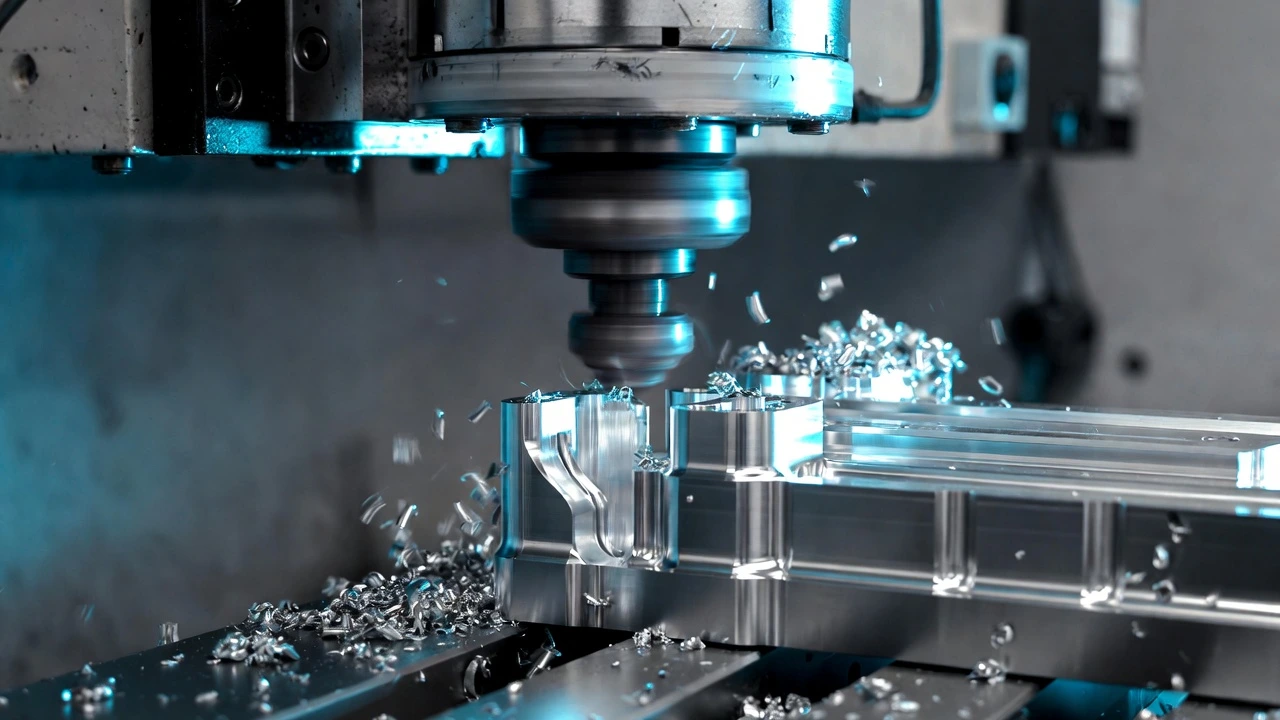
303 contains added sulfur, which acts as a built-in lubricant. It breaks chips into small, manageable pieces rather than long, stringy nests that scratch surface finishes. In our shop, we can often run 303 at 25–30% higher speeds than 304, which directly translates to a lower cost for you.
304 vs. 316: When the Extra Cost is Mandatory
The jump from 304 to 316 isn’t just about price; it’s about Molybdenum.
-
304 Stainless: The “Workhorse.” Great for brackets, housings, and food-grade equipment. It’s tough, but it work-hardens quickly. If the tool dwells for even a second too long, the surface becomes harder than the tool itself.
-
316 Stainless: The “Marine Grade.” If your part is going into the ocean or a chemical processing plant, 304 will eventually tea-stain and pit. 316 is a requirement here. From a stainless steel CNC machining manufacturer’s perspective, 316 is “gummier,” requiring specialized coatings on our drills to prevent heat buildup.
Real-World Technical Data: Machinability & Performance
| Grade | Machinability Rating | Corrosion Resistance | Best Used For… |
| 303 | 78% | Moderate | Gears, shafts, and complex manifold prototypes. |
| 304 | 45% | High | Kitchenware, automotive trim, and structural frames. |
| 316L | 36% | Excellent | Medical implants, marine hardware, pharmaceutical pumps. |
| 17-4 PH | 40% (Annealed) | High | Aerospace components and high-stress industrial valves. |
Hardening the Hardware: The 17-4 PH Advantage
Sometimes, you need the corrosion resistance of stainless but the strength of tool steel. This is where 17-4 PH (Precipitation Hardening) shines. We frequently use this for clients in the aerospace and defense sectors.
The beauty of 17-4 is that we can machine it while it’s relatively “soft” (Condition A), and then heat-treat it to your required HRC level. Unlike other steels, 17-4 has minimal dimensional change during heat treatment, meaning your ± 0.01 mm tolerances stay exactly where we put them.
Moving Beyond the Metal: DFM and Scaling
Selecting the grade is only half the battle. Our role at BOONA is to provide a comprehensive Design for Manufacturability (DFM) review before a single chip is cut. For instance, if you are planning on low-volume manufacturing, we might suggest slight geometry changes to accommodate the high-pressure coolant needed for stainless steel deep-hole drilling.
If your project eventually scales into plastic components, our expertise in custom injection mold tooling ensures that the fitment between your stainless internals and plastic housings is seamless.
Why Engineers Trust the BOONA Process
Google’s E-E-A-T framework is built on trust, and in manufacturing, trust is built on verification. Every stainless steel part that leaves our Shenzhen facility is backed by:
-
SGS/Material Certifications: We verify the chemical composition of the raw stock.
-
CMM Inspection: Automated coordinate measuring to ensure 100% compliance with your 2D drawings.
-
Visual Perfection: From passivation to electro-polishing, we handle the surface finishing options that make your prototypes look like production-ready products.
Stop guessing on your material specs. Send your STEP files to our engineering team today. We’ll provide a quote and a DFM analysis within 2 hours, helping you choose the grade that fits your budget and your environment.
FAQs
I’m on a tight budget. Can I just use 304 instead of 316 for a marine-environment prototype?
The Short Answer: No. If it’s going near salt water, don’t cut corners. The Machinist’s View: We’ve seen 304 parts start “tea-staining” (that ugly brown surface rust) within weeks in humid, coastal environments like Shenzhen. While 304 is great for general purpose CNC machining, 316 contains Molybdenum, which is the only thing standing between your part and total pitting corrosion. If cost is the issue, let’s look at your geometry—often we can simplify the design to save more money than the material swap ever would.
Why does my stainless steel quote look so much higher than the aluminum one for the same design?
The Reality of Cycle Time: It’s not just the raw material cost; it’s the “wear and tear.” Aluminum is like cutting through butter. Stainless steel is a “gummy” beast that work-hardens if you even look at it wrong. We have to run slower feeds and speeds to prevent tool chatter and melting. A part that takes 10 minutes in 6061 might take 45 minutes in 304. Plus, we go through carbide end mills significantly faster. When you see a higher price on our custom metal parts quote, you’re paying for the specialized tooling and the extra machine hours required to keep those tolerances tight.
My part needs to be welded. Can I use 303 because it’s easier to machine?
The Warning: Absolutely not. This is a classic trap. 303 is “free-machining” because of the added sulfur, but that same sulfur will cause your welds to crack (hot shortness). If your assembly involves TIG or MIG welding, you need to stick with 304L or 316L. The “L” stands for low carbon, which prevents “carbide precipitation” at the weld joint. Check our stainless steel material guide for the weldability ratings of each grade.
Can you hit a ±0.005mm tolerance in 17-4 PH?
The Technical Limit: We can get close, but for stainless, we usually recommend a standard of ±0.01mm. 17-4 PH is a fantastic material because we can machine it while it’s soft and then heat-treat it to incredible hardness. However, even with “Precipitation Hardening” steels that have low distortion, there is always a tiny bit of movement during the heat-treat cycle. If you have a ultra-critical bearing fit, we prefer to machine it, heat-treat it, and then perform a final “hard-milling” or grinding pass to hit those surgical tolerances.
Does BOONA offer passivation in-house, or do I need to outsource that?
The One-Stop Solution: We handle it all right here. Machining stainless steel actually leaves microscopic particles of “tramp iron” from the cutting tools on the surface. If you don’t passivate the part (an acid bath that removes free iron), even the best 316L part will rust. Every CNC prototype we ship is cleaned and passivated as standard practice. We also provide full CMM inspection reports so you know the dimensions are right before you even open the box.
Have a specific technical question about your drawing? Don’t waste hours second-guessing your material choice. Contact our engineering team directly. We’ll look at your 3D files and tell you exactly which stainless grade will survive your application without blowing your budget.