
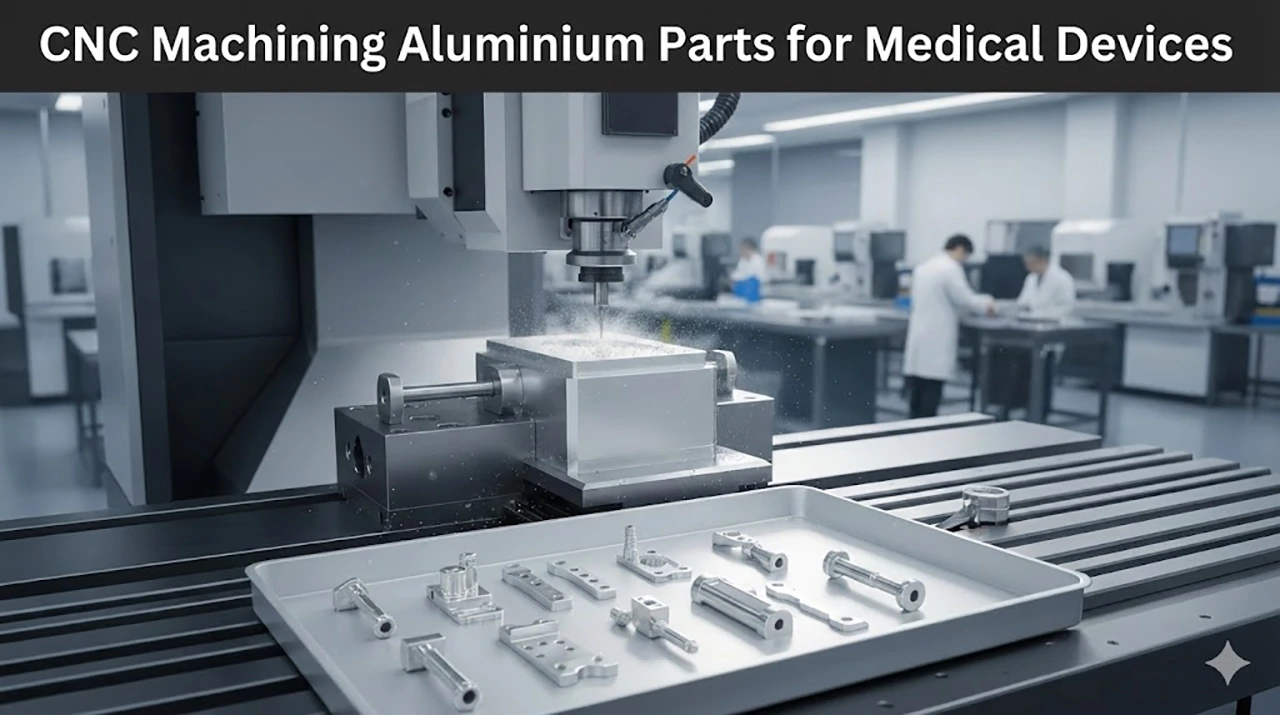
In the medical device industry, precision, reliability, and consistency are non-negotiable. From diagnostic equipment housings to surgical system frames, CNC machining aluminum parts for medical devices has become a preferred manufacturing solution due to its accuracy, speed, and material performance.
This article explains why aluminum is widely used in medical CNC machining, key technical parameters, quality requirements, and how professional suppliers like
BOONA Prototypes support rapid prototyping and low-volume medical manufacturing.
Why CNC Machining Is Ideal for Medical Aluminum Parts
Medical devices often require tight tolerances, complex geometries, and excellent surface quality. CNC machining provides:
-
High dimensional accuracy and repeatability
-
Stable quality from prototype to production
-
Fast lead times compared to tooling-based processes
-
Compatibility with regulated manufacturing workflows
High-search long-tail keyword: precision CNC machining for medical devices
Learn more about BOONA
custom CNC machining services designed for high-precision applications.
Why Aluminum Is Widely Used in Medical Devices
Aluminum offers an ideal balance of performance and cost for non-implantable medical components.
Key Advantages of Aluminum in Medical CNC Machining
-
Lightweight for portable and handheld devices
-
Excellent machinability for complex medical designs
-
Corrosion resistance after anodizing
-
Lower cost compared to titanium and stainless steel
Common Medical Applications of CNC Machined Aluminum Parts
CNC-machined aluminum components are commonly used in:
-
Diagnostic equipment housings
-
Imaging system enclosures
-
Surgical device frames and handles
-
Medical automation brackets
-
Wearable and portable medical devices
BOONA
rapid prototyping services enable engineers to validate medical designs quickly using production-grade aluminum.
Medical-Grade Aluminum Alloys for CNC Machining
Selecting the correct aluminum alloy is essential for strength, corrosion resistance, and surface quality.
Table 1: Aluminum Alloys Used in Medical CNC Machining
| Aluminum Alloy | Key Properties | Typical Medical Applications |
|---|---|---|
| 6061-T6 | Excellent machinability, corrosion resistance | Device housings, frames |
| 7075-T6 | Very high strength, lightweight | Structural medical components |
| 5052 | Superior corrosion resistance | Panels, enclosures |
CNC Machining Processes for Medical Aluminum Components
Medical parts often require multi-axis CNC machining to achieve complex shapes and tight tolerances.
Common CNC Processes
-
3-axis CNC milling for standard medical components
-
4-axis and 5-axis CNC machining for complex geometries
-
CNC turning for cylindrical medical parts
-
High-speed machining for thin-wall aluminum designs
BOONA engineering-driven workflow is outlined on the
About BOONA page.
Precision Tolerances & Technical Parameters
Medical devices demand consistent dimensional accuracy across batches.
Table 2: Typical CNC Machining Parameters for Medical Aluminum Parts
| Parameter | Typical Capability |
|---|---|
| Dimensional tolerance | ±0.01 mm |
| High-precision tolerance | ±0.005 mm |
| Surface roughness | Ra 0.8–3.2 μm |
| Flatness | ≤0.02 mm |
| Hole position accuracy | ±0.01 mm |
Surface Finishing for Medical Aluminum Parts
Surface finishing improves durability, corrosion resistance, and ease of cleaning.
Common Medical Surface Finishes
-
Type II anodizing (protective & decorative)
-
Type III hard anodizing (wear resistance)
-
Bead blasting for uniform matte finish
-
Polishing for smooth, cleanable surfaces
Surface finish selection depends on device environment and cleaning requirements, even when aluminum parts do not contact the human body directly.
Quality Control & Medical Manufacturing Standards
Although aluminum components are typically non-implantable, strict quality control is still essential.
Quality Assurance Measures
-
ISO 9001 quality management system
-
In-process and final inspections
-
CMM measurement reports
-
Material certificates and traceability
BOONA integrates inspection throughout the
CNC prototyping process, ensuring reliable results from prototype to production.
Design for Manufacturability (DFM) in Medical CNC Machining
Early DFM optimization reduces cost and lead time.
DFM Best Practices for Aluminum Medical Parts
-
Maintain uniform wall thickness
-
Avoid sharp internal corners
-
Use standard hole and thread sizes
-
Minimize deep cavities and thin ribs
Engineering feedback before machining helps prevent costly redesigns.
Prototyping vs. Production for Medical Aluminum Parts
Table 3: CNC Prototyping vs Production Comparison
| Stage | Quantity | Lead Time | Purpose |
|---|---|---|---|
| Rapid prototyping | 1–20 pcs | 3–7 days | Design validation |
| Pilot production | 20–500 pcs | 1–3 weeks | Testing & certification |
| Low-volume production | 500–5,000 pcs | Ongoing | Market launch |
Challenges in CNC Machining Aluminum for Medical Devices
-
Burr control on thin edges
-
Heat deformation during high-speed machining
-
Maintaining tight tolerances across batches
-
Documentation for regulated industries
These challenges highlight the importance of working with an experienced CNC machining partner.
Choosing the Right CNC Machining Partner for Medical Aluminum Parts
When selecting a CNC supplier, look for:
-
Experience with medical and precision parts
-
Tight tolerance machining capability
-
In-house inspection equipment
-
No-MOQ rapid prototyping support
BOONA Prototypes focuses on speed, precision, and flexibility, supporting global medical device companies throughout product development.
Conclusion
CNC machining aluminum parts for medical devices provides the precision, scalability, and efficiency required by today’s medical industry. By selecting the right aluminum alloy, machining process, and manufacturing partner, medical OEMs can accelerate development while maintaining consistent quality.
👉 Learn more at:
https://www.boona-prototypes.com/
FAQs
Why is CNC machining widely used for aluminum medical device parts?
CNC machining offers high precision, repeatability, and excellent surface quality. It is ideal for aluminum medical parts that require tight tolerances, complex geometries, and fast prototyping.
Is aluminum suitable and safe for medical devices?
Yes. Aluminum is commonly used in non-implantable medical devices such as housings, frames, and diagnostic equipment. Surface treatments like anodizing improve corrosion resistance and cleanability.
Which aluminum alloys are best for medical CNC machining?
The most commonly used aluminum alloys include:
-
6061-T6 for general medical device housings
-
7075-T6 for high-strength structural components
-
5052 for corrosion-resistant enclosures
What tolerances can CNC machining achieve for medical aluminum parts?
Professional CNC machining suppliers can typically achieve ±0.01 mm tolerances, with high-precision machining reaching ±0.005 mm, depending on part design and material.
What surface finishes are used for aluminum medical device parts?
Common surface finishes include:
-
Type II anodizing
-
Type III hard anodizing
-
Bead blasting
-
Polishing
These finishes enhance durability, appearance, and ease of cleaning.
Is CNC machining suitable for medical device prototyping?
Yes. CNC machining is ideal for medical device prototyping, allowing engineers to test form, fit, and function using production-grade aluminum materials within days.
What quality standards apply to CNC machining for medical devices?
Most suppliers follow ISO 9001 quality management systems. Medical-focused CNC manufacturers also align processes with ISO 13485-related quality principles, including inspection and traceability.
Can CNC machining support both prototypes and low-volume production?
Absolutely. CNC machining supports one-off prototypes, pilot runs, and low-to-medium volume production, making it suitable throughout the medical product lifecycle.
What are common challenges when machining aluminum for medical devices?
Challenges include burr control, thin-wall deformation, heat management, and maintaining consistent tolerances across batches. These require experienced CNC machining expertise.
How do I choose the right CNC machining partner for medical aluminum parts?
Choose a supplier with medical industry experience, tight tolerance capability, in-house inspection equipment, and support for rapid prototyping with no minimum order quantities.