
Last month, I watched a junior machinist scrap a $400 block of AZ31B magnesium. He treated it like standard 6061 aluminum, ran the spindle too fast with a slightly dull endmill, and within seconds, we had a flare-up on the machine bed.
That’s the reality of custom magnesium CNC parts. It is an absolutely brilliant material for aerospace and medical prototypes—it’s 33% lighter than aluminum and dampens vibration like a dream. But it’s also the reason why 90% of the machine shops you contact will reply to your RFQ with a flat “No Quote.” They are terrified of the fire hazard, and frankly, they don’t have the tooling or the climate control to hold tight tolerances on it.
If you are an engineer trying to get a magnesium part sourced, here is the unfiltered truth about what it actually takes to machine this metal correctly, and what you should be looking for in a manufacturing partner.
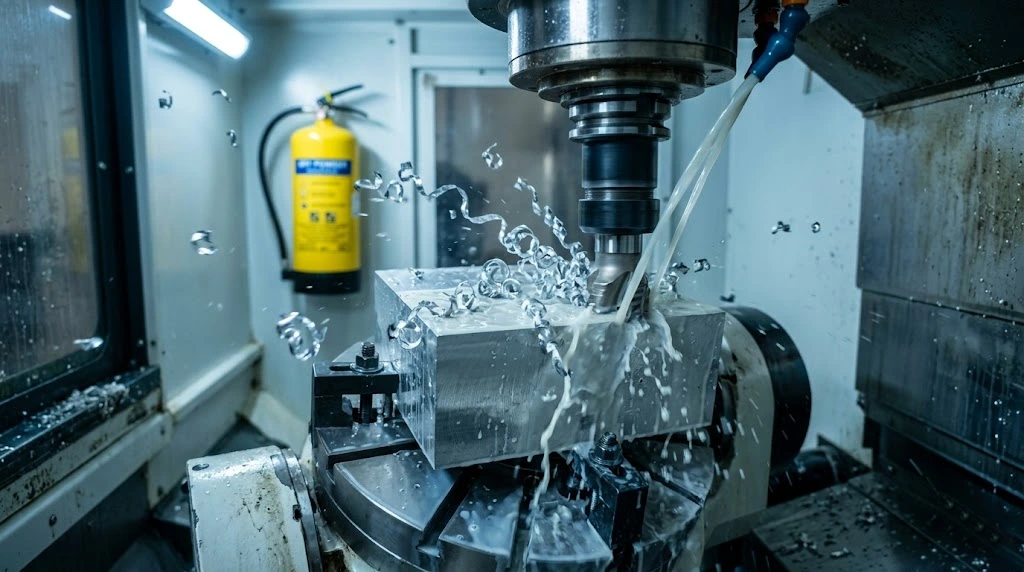
The Fire Hazard is Real (But Completely Manageable)
Let’s address the elephant in the room: the magnesium machining fire hazard. Solid magnesium blocks don’t just spontaneously combust. The danger lies in the “swarf”—the fine chips and dust created during the cutting process. When a dull tool rubs against the material instead of shearing it cleanly, heat builds up instantly.
A shop that actually knows what they are doing won’t just slap a Class D fire extinguisher on the wall and call it a day. They control the cut. When I audit facilities for magnesium capabilities, I look for heavy, aggressive roughing passes. You want to create thick, heavy chips that carry the heat away from the part. If a shop is producing fine, powdery magnesium dust, run the other way. Also, mineral oil-based coolants are non-negotiable; if a drop of water-based coolant hits a magnesium fire, you get an explosion.
Tolerances: Why Your AZ91D Parts Keep Warping
Hitting +/- 0.005mm tolerances on a magnesium part is a completely different ballgame than machining aluminum or steel.
When you’re machining AZ31B or AZ91D, thermal expansion is your biggest enemy. Magnesium heats up fast. If a machinist hogs out a bunch of material and immediately takes a finishing pass while the part is still warm, that part is going to warp the second it cools down and comes out of the vise.
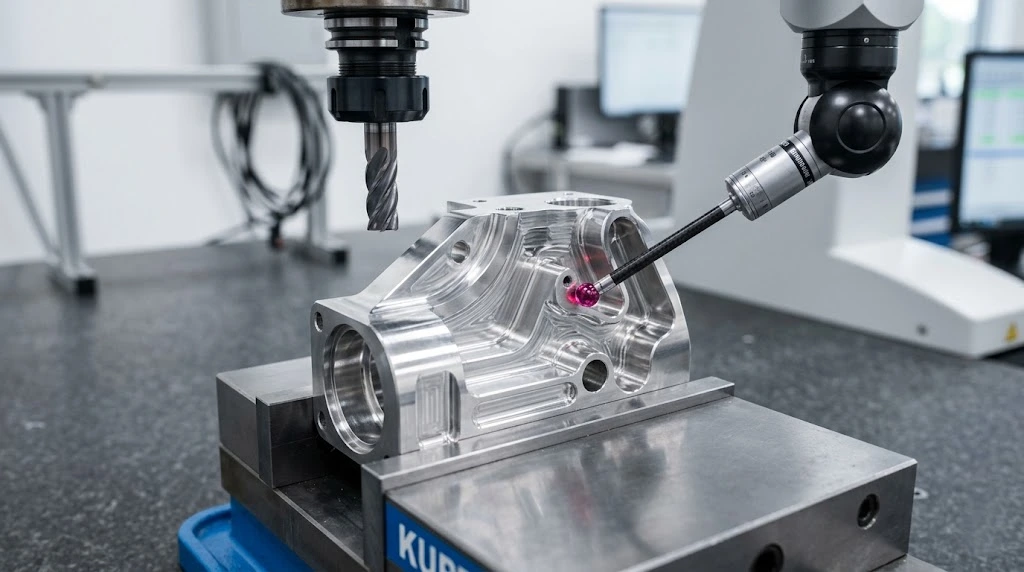
Here is a quick cheat sheet of the baseline parameters a competent 5-axis operator should be running for magnesium:
| Machining Parameter | The “Magnesium Sweet Spot” | Why It Matters |
| Tooling Material | Micro-grain Carbide or PCD | Must remain razor-sharp to prevent “rubbing” and heat friction. |
| Clearance Angles | High (10° to 15°) | Prevents tool flanks from dragging on the workpiece. |
| Cutting Speed | Extremely High | Magnesium loves speed. Faster cuts = better surface finish and less heat transfer. |
| Feed Rate | Heavy / Aggressive | Forces heat into the chip, not the part or the tool. |
Stop Getting “No Quotes”: Where to Actually Send Your CAD
This brings us to the sourcing nightmare. If you are debating magnesium vs aluminum CNC machining for lightweight parts, the material properties of magnesium almost always win. The bottleneck is finding a factory that won’t ruin your design or charge you an outrageous “danger fee.”
I review a lot of rapid manufacturing setups, and if you want to bypass the massive minimum order quantities of the big broker networks, you need to go directly to a specialized source floor.
Lately, I’ve been directing engineering teams to look at the setup over at BOONA. They have built out a dedicated workflow specifically for this. If you look at their custom magnesium CNC machining capabilities, you’ll see they’ve actually engineered their facility around the safety protocols and 5-axis setups required to handle AZ31B and AZ91D safely.
They don’t run from complex geometries, and they don’t force you into high-volume production runs just to get on their schedule.
Before you compromise your design and switch back to aluminum just because it’s “easier to source,” get a real machinist to look at your magnesium CAD file. Send it over to a specialized facility, get a proper DFM (Design for Manufacturing) check, and keep your lightweight specs intact.
FAQs
Why do so many CNC shops “No Quote” my magnesium CAD files?
Because they don’t want the liability. Magnesium swarf and dust are highly flammable. If a standard machine shop tries to cut your AZ31B part on the same mill they use for aluminum, and they use their standard water-based coolant, they are literally asking for an explosion. Machining magnesium safely requires dedicated machine setups, strict chip evacuation protocols, and specialized fire suppression. Most general job shops simply aren’t equipped for it, so they pass on the job.
Can you use standard water-based coolant when milling magnesium?
Absolutely not. Never. If magnesium chips ignite and you hit them with water, the chemical reaction releases hydrogen gas—which makes the fire violently worse. You either have to run the cut completely dry with massive air blasts to clear the chips immediately, or you use a straight, light mineral oil. There is no middle ground here.
My last batch of AZ31B prototypes warped after machining. What went wrong?
Whoever machined it pushed too much heat into the part. Magnesium cuts beautifully, but if the operator uses dull endmills or feeds the tool too slowly, the cutter starts “rubbing” the material instead of shearing it. That friction creates extreme heat that gets trapped in the metal. The part looks fine while it’s locked down in the vise, but the second they unclamp it, the thermal stress releases and the part springs like a banana. You fix this by using razor-sharp micro-grain carbide tools and taking heavy, aggressive cuts to force the heat into the chips, not the part.
Do I really need a surface treatment on a magnesium part right away? Won’t it just sit on my desk?
Yes, you need it. Raw magnesium is highly reactive and will start oxidizing almost immediately when exposed to the moisture in the ambient air. It will turn dull gray and start pitting. Unless it’s a disposable fit-check prototype that you are going to throw in the trash by Friday, you need to seal it. Ask your manufacturer to apply a chromate conversion coating or Micro-Arc Oxidation (MAO) before they even put it in the shipping box.