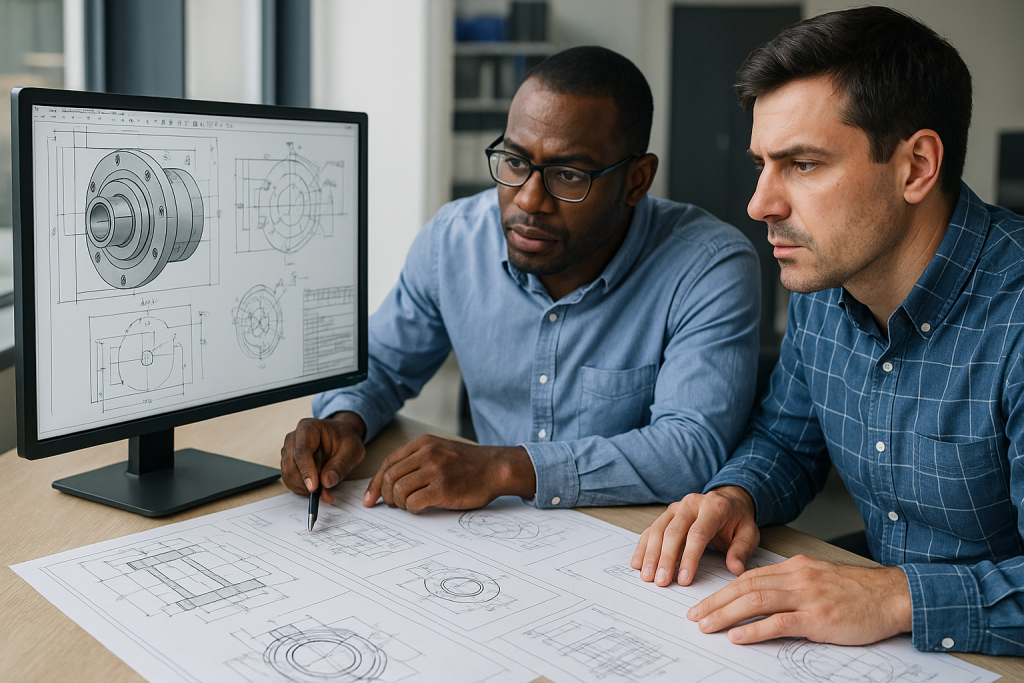
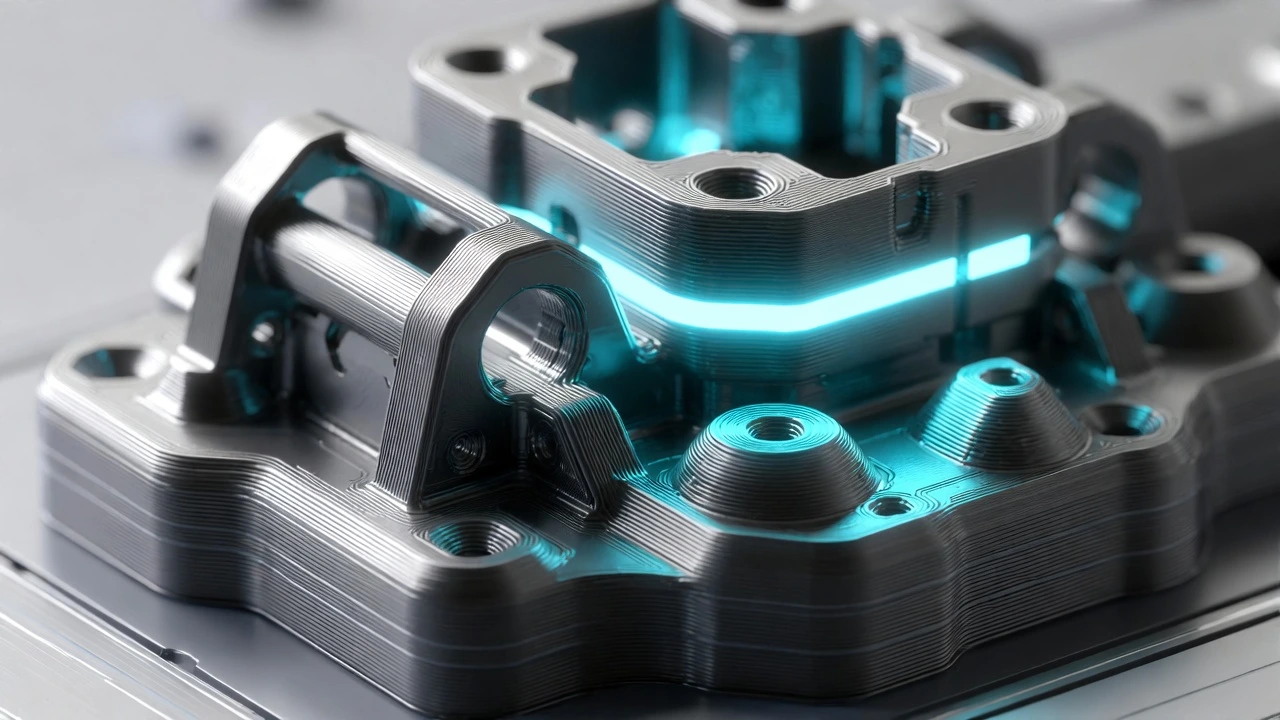
I’ve lost count of how many times a client has sent us a CAD file for a complex enclosure, expecting it to snap together perfectly right out of the printer. They look at the spec sheet, see “0.1mm resolution,” and assume it’s the same as CNC machining precision.
It usually isn’t.
If you are an engineer or product designer, you know that “resolution” is not “accuracy.” A machine can have a laser spot size of 0.05mm (resolution), but if the material shrinks by 2% significantly during cooling, your part is going to be out of spec.
At Boona Prototypes, we believe in honest manufacturing. Industrial 3D printing is a miracle for complex geometries and speed, but if you treat it like a generic “make button” without understanding tolerances, you will end up with expensive paperweights.
Here is the realistic breakdown of how accurate industrial 3D printing actually is, based on thousands of parts we’ve run through our shop.
The “Paper Specs” vs. Reality
Let’s get the technical standards out of the way. Most industrial additive manufacturing (AM) processes aim for ISO 2768-m (Medium) tolerances. In contrast, CNC machining typically hits ISO 2768-f (Fine) or better.
Here is the data we use internally to set expectations for our clients:
| Technology | Process | Real-World Tolerance | The “Gotcha” (Risk Factor) | Best For… |
| SLA | Stereolithography | ±0.1 mm (under 100mm) | UV Post-curing can warp thin walls if not supported. | High-fidelity visuals, master patterns for vacuum casting. |
| SLS/MJF | Powder Bed Fusion | ±0.3 mm (or ±0.3%) | Thermal shrinkage is real. Large flat areas may curl. | Functional prototypes, snap-fits, housings. |
| DMLS | Metal 3D Printing | ±0.1 mm – ±0.2 mm | Internal stress is massive. Needs stress relief heat treatment. | Complex aerospace parts, impossible-to-machine channels. |
| FDM | Industrial Extrusion | ±0.2 mm – ±0.5 mm | Z-axis (vertical) is always the weakest link. | Simple jigs, fixtures, fit-checks. |
Engineer’s Note: These numbers are for well-calibrated industrial machines (like our EOS or Stratasys systems), not desktop hobby printers. Desktop units rarely hold these tolerances consistently.
Why Does Accuracy Drift? (The Human Factor)
The machine is only half the equation. The other half is how we, as manufacturers, handle the build preparation. When we analyze a 3D printing quote, we look for three “accuracy killers”:
1. The Orientation Trap
Imagine printing a thin, flat ruler standing up vertically. It will wobble as the printer head moves, creating a rough surface and poor dimensions. If we lay it flat, it’s stable, but the Z-resolution steps might be visible.
-
Our Fix: We orient parts to prioritize your “Critical to Quality” (CTQ) features. If a specific bore needs to be perfectly round, we build it parallel to the XY plane.
2. Thermal Shrinkage (The Silent Killer)
This is especially true for SLS 3D printing with Nylon. The powder is heated near its melting point. As it cools, it contracts. If the geometry is unbalanced (thick sections next to thin ones), it pulls apart.
-
Our Fix: We apply scaling factors in our software before printing. If we know Nylon 12 shrinks by 1.5%, we scale the model up by 1.5%. It’s not guessing; it’s math.
3. Post-Processing Variance
People forget that 3D printed parts aren’t finished when the print ends. Supports must be removed.
-
Manual Error: If a technician aggressively sands down a support nub, they might remove 0.1mm of the actual part geometry. This is why automated tumbling and skilled technicians are vital.
When 3D Printing Isn’t Accurate Enough
We love 3D printing, but we aren’t afraid to tell you when not to use it.
If your drawing has a tolerance of ±0.01mm (10 microns), do not 3D print that feature.
-
Option A: Redesign the part to be more forgiving (looser tolerances).
-
Option B: Use a Hybrid Manufacturing approach.
The Hybrid Approach is our secret weapon for precision. We 3D print the complex, organic shape (near-net shape), and then we take it to our 5-axis CNC mill to machine the critical bearing surfaces or mating faces. You get the geometry freedom of printing with the precision of machining.
Final Thoughts: How to Guarantee Your Parts Fit
Accuracy is a collaboration between your design and our machines. To ensure you get the best results:
-
Design for Additive (DfAM): Add meaningful fillets to corners to reduce stress.
-
Talk to Us Early: Don’t wait until the final design is frozen. Let us review your file during the prototyping phase.
-
Specify Your Needs: If a specific hole needs to be a press-fit, mark it on a 2D drawing. We can ream it manually after printing to ensure a perfect fit.
Industrial 3D printing is incredibly accurate if you respect its limits.
Need a second opinion on your design’s manufacturability?
Upload your CAD file to our secure portal. Our engineers will review the geometry and tell you exactly what tolerances we can hold—no sugarcoating, just real data.