
There is a very specific, blinding white flash that happens right before a $150,000 5-axis mill is completely ruined.
I’ve seen grown men panic in front of a CNC enclosure because a batch of AZ31B magnesium started throwing sparks. Their first instinct is almost always to grab the nearest water-based coolant hose. If you do that, the water molecules instantly break down, releasing oxygen and hydrogen gas. You don’t just put out a fire—you trigger a localized bomb.
This is exactly why 90% of job shops look at your aerospace CAD file, see the word “Magnesium,” and immediately reply with a “No Quote.” They treat it like standard 6061 aluminum, which is a recipe for disaster. But as someone who has spent years optimizing rapid prototyping floors, I can tell you: magnesium isn’t dangerous if you actually understand the physics of the cut.
If you’re an engineer struggling to get your lightweight parts sourced, here is the unfiltered reality of what goes wrong on the shop floor, and the exact data required to machine it safely.
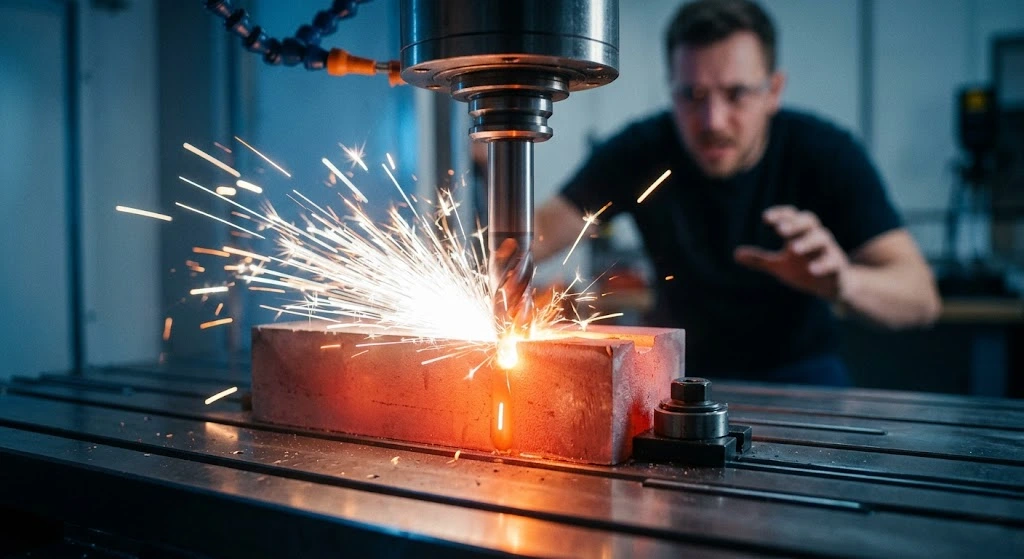
Stop Blaming the Metal. Look at the Swarf and the Math.
A solid block of AZ91D magnesium sitting on a workbench is basically inert. You could hold a blowtorch to a thick billet and it would just absorb the heat. The danger lies entirely in the swarf—the fine chips and powdery dust generated during machining.
Magnesium dust ignites at approximately 473°C (883°F). When a shop tries to save money by running slightly dull endmills, the tool stops cleanly shearing the metal and starts rubbing it. That friction causes a massive, instantaneous temperature spike.
To prevent this, you can’t just guess your feeds and speeds. You need rigid parameters. When I audit a facility’s safety protocols, I look for these exact baseline numbers:
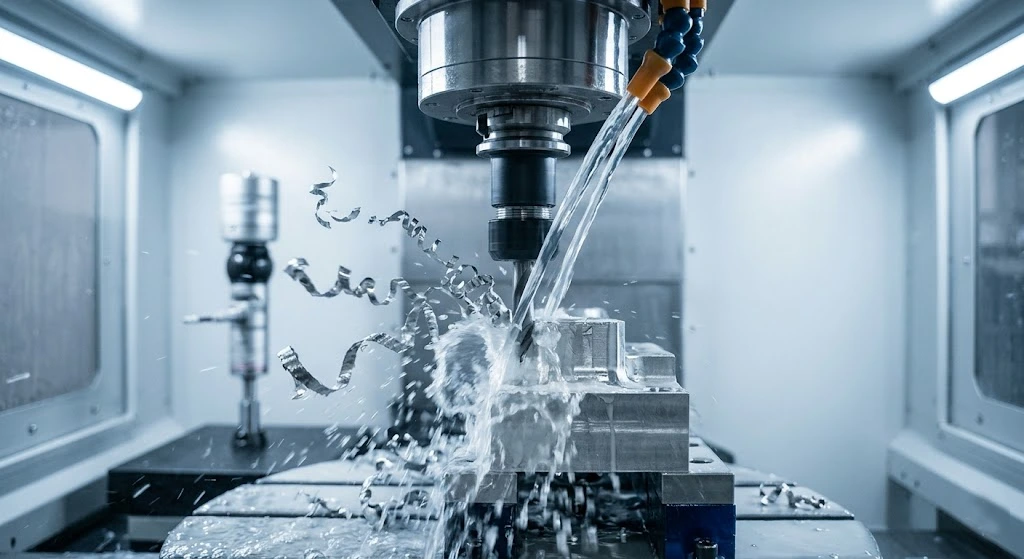
The Magnesium Machining “Survival” Parameters
| Machining Variable | The Required Target Spec | The Engineering Rationale |
| Tool Material | Uncoated Micro-grain Carbide or PCD | Must remain razor-sharp to shear the metal; prevents edge build-up and “rubbing” friction. |
| Clearance Angles | High (10° to 15° minimum) | Strictly prevents the tool flanks from dragging on the workpiece and generating heat. |
| Cutting Speed (Vc) | 900 – 1,500 m/min (Extremely High) | Magnesium loves speed. Faster cuts transfer heat directly into the chip, leaving the part cool. |
| Feed Rate (fz) | 0.15mm – 0.30mm/tooth (Aggressive) | Counterintuitive, but crucial: heavy feeds create thick chips that carry heat away. Thin cuts create explosive dust. |
| Coolant Type | 100% Light Mineral Oil (Viscosity < 10 cSt) | Snuffs out sparks, manages thermal expansion, and prevents hydrogen gas reactions. Zero water allowed. |
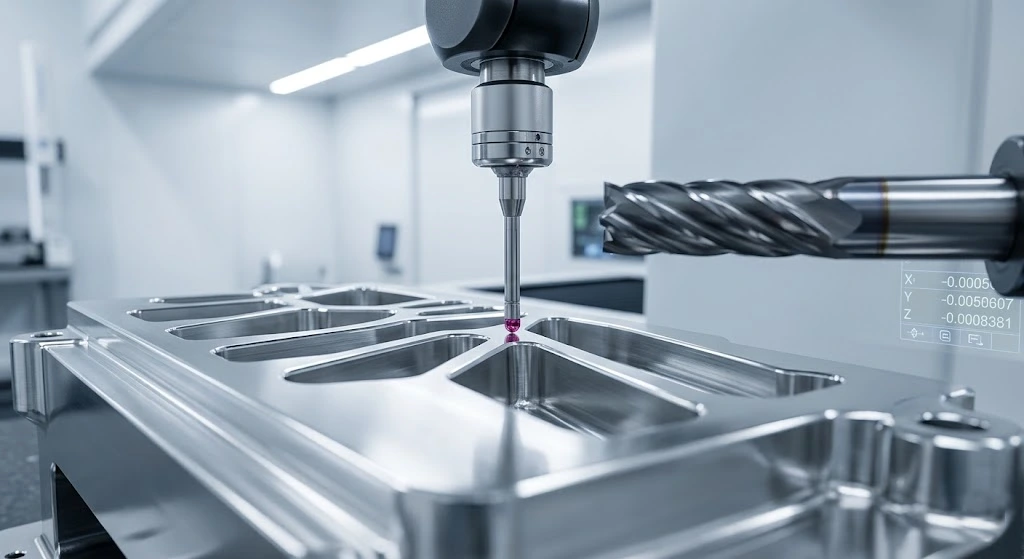 The Counterintuitive Fix: Hog It Out
Look at the feed rate in that table. Most inexperienced operators get scared of magnesium, so they slow the feed down and take very light, cautious passes. That is the worst thing you can do. Thin cuts create the exact highly combustible dust you are trying to avoid.
You actually want to use those razor-sharp carbide tools to take heavy, aggressive roughing cuts. A thick, heavy chip has enough physical mass to absorb the heat of the cut and carry it away from the workpiece. You force the heat into the chip, not the dust.
Where Should You Actually Send Your PO?
Hitting a tight +/- 0.005mm tolerance on a magnesium housing without warping it or setting the shop on fire takes serious infrastructure. You need the 33% weight reduction that magnesium offers over aluminum, but you can’t afford the liability of a generalist shop experimenting on your dime.
You have to bypass the general job shops and go straight to a facility that has engineered their physical building around this specific metal. This is exactly why I constantly point engineering teams toward the specialized setup over at BOONA Prototypes.
They didn’t just bolt a Class D dry powder fire extinguisher to the wall and call themselves experts. If you look at their dedicated custom magnesium CNC machining workflow, you will see a facility that fundamentally understands the data and the physics. They strictly enforce the heavy-feed toolpaths from the table above, they mandate the light mineral oil setups, and they manage the thermal limits perfectly.
Stop compromising your designs because standard shops are afraid of the material. Send your CAD to a facility that actually runs the right numbers and controls the cut.
FAQs
Is it safer to slow down the feed rate when milling magnesium to prevent sparks?
This is the most dangerous rookie mistake in the industry. It sounds logical to “take it slow,” but if you drop your feed rate below 0.15mm/tooth, you stop cutting chips and start making fine powder. That thin dust is exactly what ignites when the temperature hits 473°C. You must use aggressive, heavy feeds. A thick, heavy chip acts as a heat sink—it absorbs the thermal energy from the cut and carries it safely away from the workpiece.
Can a shop use a highly diluted, 95% water-soluble coolant if they keep the pressure high?
Zero water is the absolute rule. It doesn’t matter how diluted the mix is. If a single spark hits that coolant, the extreme heat strips the oxygen molecules right out of the water, leaving raw hydrogen gas in your machine enclosure. You are literally engineering an explosion. The only acceptable fluid is 100% light mineral oil with a viscosity under 10 cSt. It manages the +/- 0.005mm thermal expansion and physically suffocates stray sparks.
Why do I need specific tooling? Can’t a shop just use sharp aluminum endmills for my AZ31B parts?
“Sharp enough for aluminum” means “dull enough to start a fire on magnesium.” Magnesium requires uncoated micro-grain carbide or PCD tools with very specific, high clearance angles—an absolute minimum of 10° to 15°. If a shop uses a standard aluminum tool with a shallow clearance, the flank of the tool drags and rubs against the part instead of shearing it. That rubbing friction is what spikes the temperature and causes a flare-up.
If a magnesium flare-up actually happens on the CNC bed, what is the exact protocol?
First, smash the E-stop to kill the spindle and shut off all air blasts so you don’t feed the fire oxygen or blow burning swarf around the enclosure. Second, you grab a yellow Class D dry powder extinguisher. You do not use a standard red ABC extinguisher, and you never use CO2. The Class D powder melts into a crust over the burning metal, completely starving it of oxygen. If your supplier doesn’t have Class D units bolted directly to their machines, pull your CAD files and find a real manufacturer.