
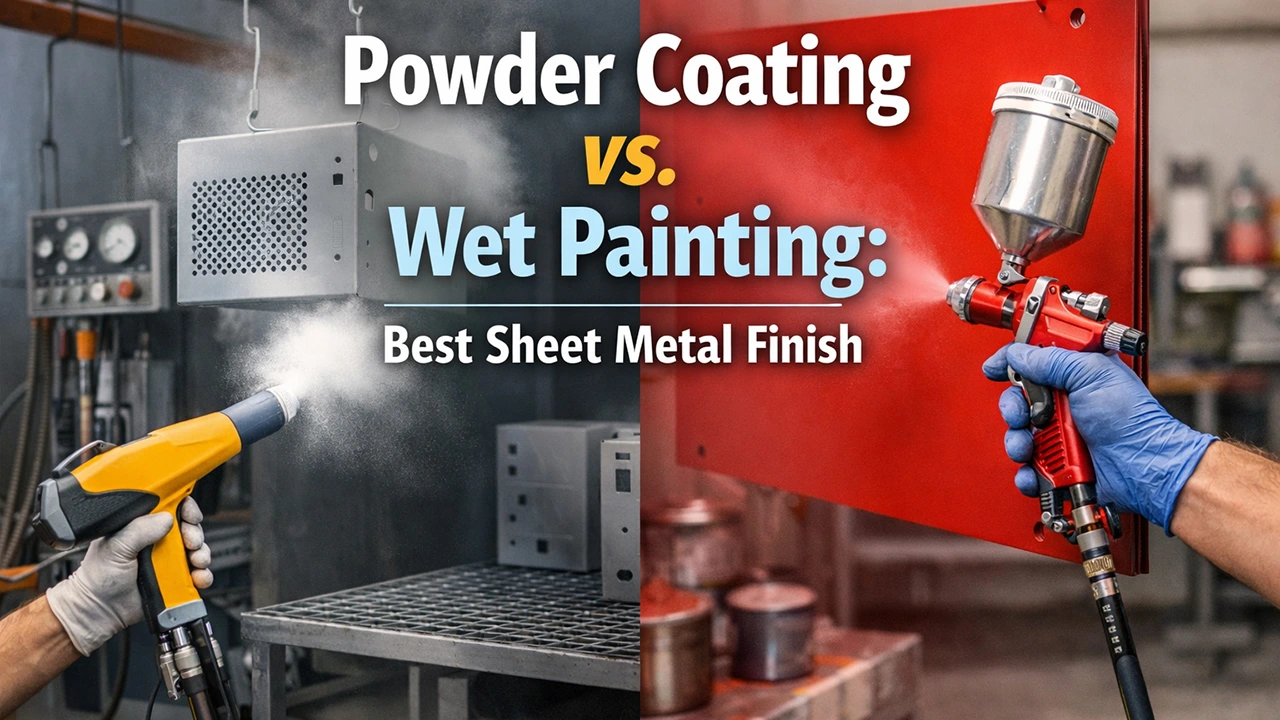
When developing custom sheet metal prototypes for industries like aerospace, automotive, electronics, or medical devices, choosing the right surface finish is critical. The finish not only enhances aesthetics but also improves durability, corrosion resistance, and overall performance. Two popular options for sheet metal fabrication finishing are powder coating and wet painting (traditional liquid painting).
At Boona Prototypes, a leading rapid prototyping manufacturer in Shenzhen, China, powder coating is highlighted as a longer-lasting alternative to painting for sheet metal parts.
Examples of high-quality powder-coated sheet metal prototypes and enclosures produced through precision fabrication.
This guide compares powder coating vs. wet painting for sheet metal prototypes, incorporating real capabilities from Boona’s services, including tolerances, materials, and lead times. Whether you’re searching for “best finishing for custom sheet metal parts in rapid prototyping” or “affordable sheet metal prototyping with durable finishes in China“, this breakdown will help you decide.
Why Surface Finishing Matters in Sheet Metal Fabrication
Sheet metal fabrication involves processes like laser cutting, bending, punching, welding, and assembly. Without proper finishing, parts are vulnerable to corrosion, wear, and environmental damage.
Boona offers comprehensive sheet metal fabrication services in China with no minimum order quantity (MOQ), fast lead times as short as 5 days, and in-house capabilities for high-precision prototypes.
Key finishing options at Boona include:
- Powder Coating
- Anodizing
- Bead Blasting
These ensure parts meet strict standards for appearance and functionality.
Laser cutting and bending processes in modern sheet metal fabrication – essential steps before applying finishes like powder coating.
Powder Coating: The Durable Choice for Sheet Metal Prototypes
Powder coating applies dry powder electrostatically, then cures it under heat to form a hard, wear-resistant barrier. Boona recommends it for all metals, available in black, white, or custom colors with gloss or semi-gloss textures.
Advantages for rapid prototyping:
- Superior durability and longevity → explicitly noted as longer-lasting than painting.
- Excellent corrosion and scratch resistance.
- Uniform coverage, even on complex geometries.
- Environmentally friendly (low VOCs, recyclable overspray).
Common applications: Custom enclosures, brackets, housings, and automotive/aerospace components.
Wet Painting: Flexible but Less Durable Alternative
Wet painting (liquid spray painting) uses solvent-based or water-based paints applied in layers. While not explicitly listed as a primary option at Boona, it’s a traditional method often compared in the industry.
Advantages:
- Easier color matching and touch-ups.
- Lower initial setup for small runs.
- Thinner coats for tight tolerances.
Drawbacks for sheet metal prototypes: More prone to chipping, fading, and environmental wear compared to powder coating.
Professional wet painting application on metal parts – flexible but generally less durable than powder coating for long-term use.
Head-to-Head Comparison: Powder Coating vs. Wet Painting
Here’s a detailed comparison tailored to custom sheet metal prototyping in China:
| Parameter | Powder Coating | Wet Painting (Liquid) | Winner for Prototyping |
|---|---|---|---|
| Durability & Longevity | Excellent (longer-lasting, per Boona) | Good, but prone to chipping/fading | Powder Coating |
| Thickness | 2-8 mils (thicker, uniform) | 1-3 mils (thinner) | Powder Coating (better protection) |
| Corrosion Resistance | High | Moderate | Powder Coating |
| Environmental Impact | Low VOCs, recyclable | Higher VOCs, more waste | Powder Coating |
| Color Options | Custom (black/white standard) | Unlimited matching | Wet Painting |
| Application Time | Single coat + curing | Multiple coats + drying | Powder Coating |
| Cost (Long-Term) | Lower (fewer recoats) | Higher maintenance | Powder Coating |
| Suitability for Heat-Sensitive Parts | Requires oven curing (~400°F) | No heat needed | Wet Painting |
Data based on industry standards and Boona’s emphasis on powder coating as a superior, longer-lasting option.
Jump to Sheet Metal Tolerances Table
Key Parameters and Tolerances in Sheet Metal Fabrication
Boona maintains tight tolerances for reliable prototypes. Here are standard parameters from their sheet metal services:
| Tolerance Type | Value | Notes |
|---|---|---|
| Forming/Bending | ±0.508 mm (0.020″) | Standard for bends |
| Bend to Edge | ±0.254 mm (0.010″) | Precision edge positioning |
| Bend to Hole | ±0.381 mm (0.015″) | Hole placement relative to bends |
| Material Thickness | 0.006–0.25 inches | Typical sheet metal range |
| Lead Time | As fast as 5 days | For prototypes with finishing |
Supported materials include Aluminum (AL6061, 5052), Stainless Steel (SS304, SS316), Copper, and Mild Steel – all compatible with powder coating.
Anodized aluminum sheet metal finish example – another durable option alongside powder coating for corrosion resistance.
Conclusion: Powder Coating Wins for Most Sheet Metal Prototyping Projects
For engineers and startups seeking the “best sheet metal finish for rapid prototyping with no MOQ in China“, powder coating emerges as the top choice due to its superior durability, efficiency, and long-term performance – especially as highlighted by experienced manufacturers like Boona Prototypes.
If your project demands ultimate longevity (e.g., outdoor enclosures or high-wear parts), go with powder coating. For ultra-precise color matching on heat-sensitive substrates, wet painting may still have a role.
Ready to start your project? Contact Boona for a free quote, manufacturability analysis, and 1-on-1 engineering support. With ISO 9001 certification and turnarounds as fast as 5 days, they’re ideal for custom sheet metal prototypes with professional powder coating finishes.
Explore more: Boona Sheet Metal Fabrication | Surface Finishing Options
FAQs
What is the main difference between powder coating and wet painting?
Powder coating is a dry process: electrostatically charged powder is sprayed onto the metal and then cured in an oven to form a hard, bonded finish. Wet painting (liquid painting) uses solvent- or water-based liquid paint that is sprayed on and dries through evaporation or air curing. The key distinction is that powder coating has no liquid carriers and requires heat curing, resulting in a thicker, more durable film.
Which finish is more durable on sheet metal parts?
Powder coating is significantly more durable. It produces a thicker coating (typically 2–8 mils vs. 1–3 mils for wet paint), offering better resistance to chipping, scratching, fading, corrosion, and chemicals. Industry experience and manufacturers like Boona Prototypes consistently describe powder coating as “longer-lasting than painting” for sheet metal applications.
Which option is more environmentally friendly?
Powder coating is far more eco-friendly. It contains little to no VOCs (volatile organic compounds), overspray can be reclaimed and reused (95%+ efficiency), and it generates minimal hazardous waste. Wet painting releases VOCs and solvents into the atmosphere and produces more waste from non-recyclable overspray.
Which provides better color options and custom matching?
Wet painting wins for color flexibility. Liquid paints can be mixed to virtually any shade (RAL, Pantone, etc.) and are easier to touch up or match exactly. Powder coating offers a wide range of standard and custom colors but is less flexible for exact matching or small-batch custom shades.
Which is more cost-effective in the long term?
Powder coating is usually more cost-effective over the part’s lifecycle. Although initial setup (oven, booth) is higher, the single-coat application, high material efficiency, and superior durability reduce maintenance and recoating costs. For low-volume prototypes or very small runs, wet painting can be cheaper upfront.
Can powder coating be applied to all sheet metal materials?
Yes, powder coating works excellently on most common sheet metal materials, including aluminum (AL5052, AL6061), stainless steel (SS304, SS316), mild steel, and copper. It is not suitable for heat-sensitive substrates or non-conductive materials without special preparation.
How does curing time and production speed compare?
Powder coating is generally faster for production runs: one coat is usually sufficient, and batch curing in an oven is efficient. Total throughput is high. Wet painting often requires primer + multiple color coats with drying time between layers, making it slower and more labor-intensive.
Which finish is better for rapid prototyping with no MOQ?
Powder coating is the preferred choice for most rapid prototyping projects, especially when durability and professional appearance matter. Manufacturers like Boona Prototypes in China offer fast lead times (as short as 5 days) with in-house powder coating, tight tolerances (±0.020″ for bending), and no minimum order quantity.
Is it easy to repair or touch up the finishes?
Wet painting is much easier to repair locally—simply sand and repaint the damaged area. Powder coating repairs are more difficult because the entire part usually needs to be stripped and recoated to avoid visible patch lines.
When should I choose wet painting over powder coating?
Choose wet painting when:
- Exact color matching is critical
- Parts cannot tolerate oven temperatures (~350–400°F)
- Very thin coatings are required for tight tolerances
- Budget is limited and the project is low-volume with minimal durability demands
For most industrial, outdoor, or high-wear sheet metal applications, powder coating remains the superior choice.