
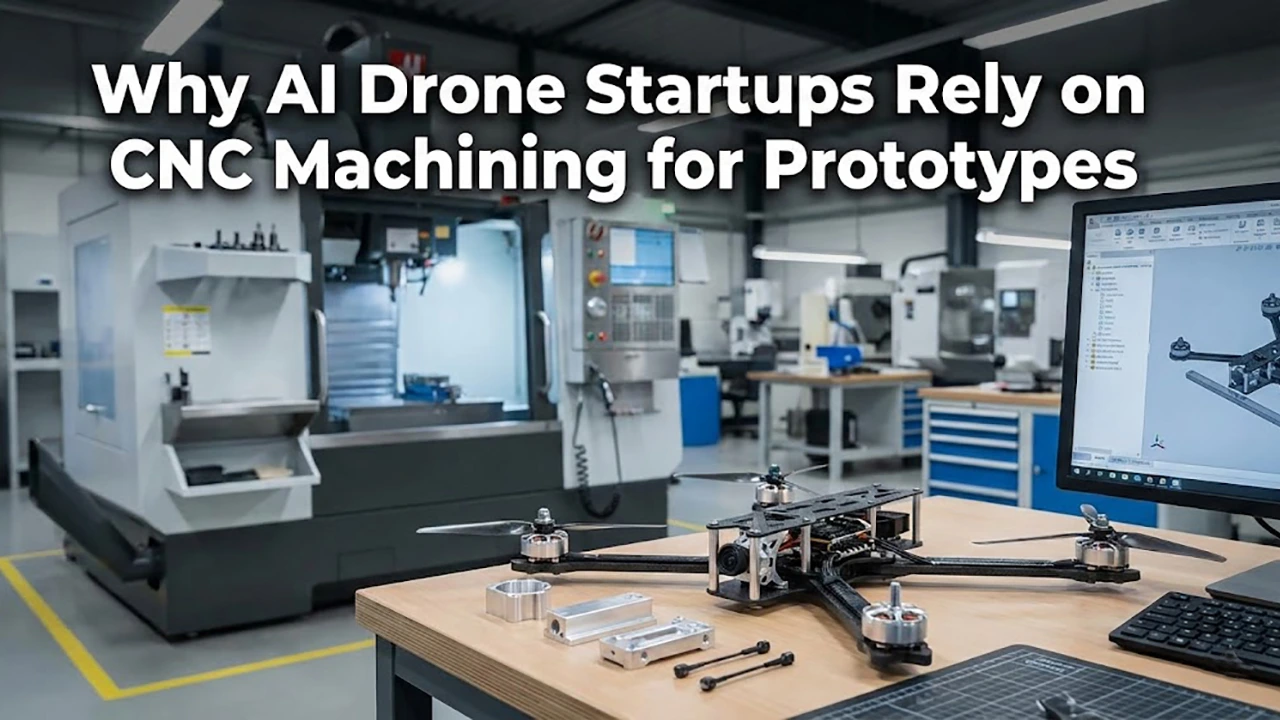
The global AI drone market is experiencing explosive growth, driven by breakthroughs in autonomous navigation, computer vision, and edge computing. For AI drone startups seeking to iterate quickly from concept to flight-ready prototypes, choosing the right manufacturing process is critical. While 3D printing dominates early visual models, precision CNC machining for AI drone prototypes remains the gold standard for functional, flight-tested parts that can withstand real-world stresses.
At Boona Prototypes, we’ve supported numerous hardware innovators and robotics teams with rapid CNC prototyping services for autonomous drone development. Our Shenzhen-based facility combines advanced multi-axis machining with fast turnarounds, enabling startups to validate AI-driven features like obstacle avoidance, precision landing, and payload integration without compromising on quality.
Why AI Drone Startups Choose CNC Machining Over Other Methods
AI-powered drones demand components that meet exacting standards for aerodynamics, weight distribution, and sensor alignment. Even minor deviations can corrupt AI training data or cause flight instability. High-precision CNC machining for drone frames and components delivers the tight tolerances and material performance that additive methods often cannot match.
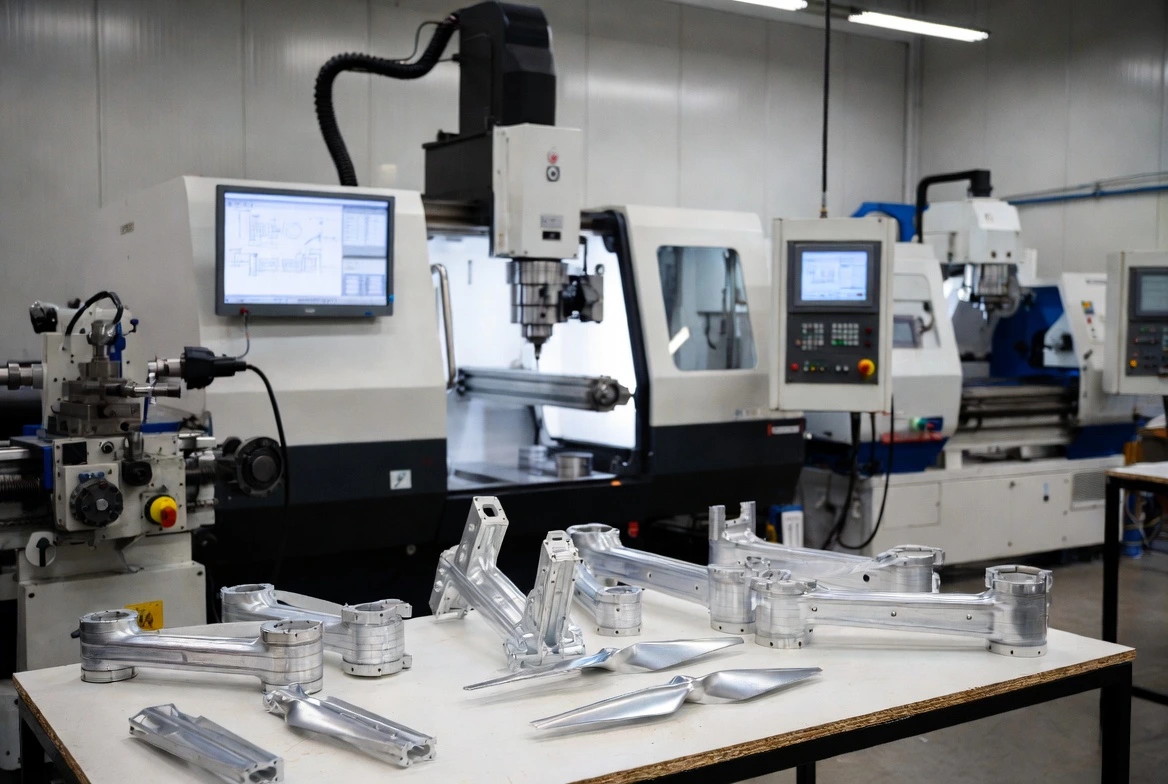
Key advantages include:
- Isotropic material properties → Unlike layered 3D-printed parts, CNC-machined components maintain consistent strength in all directions.
- Superior surface finish → Reduces aerodynamic drag critical for long-endurance flights.
- Real-world durability → Parts survive vibration, impact, and environmental testing during AI algorithm validation.
For low-volume rapid prototyping of AI drone prototypes, CNC eliminates expensive tooling costs associated with injection molding while offering better mechanical performance than FDM or SLA printing.
Precision Parameters: CNC Tolerances That Enable Reliable AI Performance
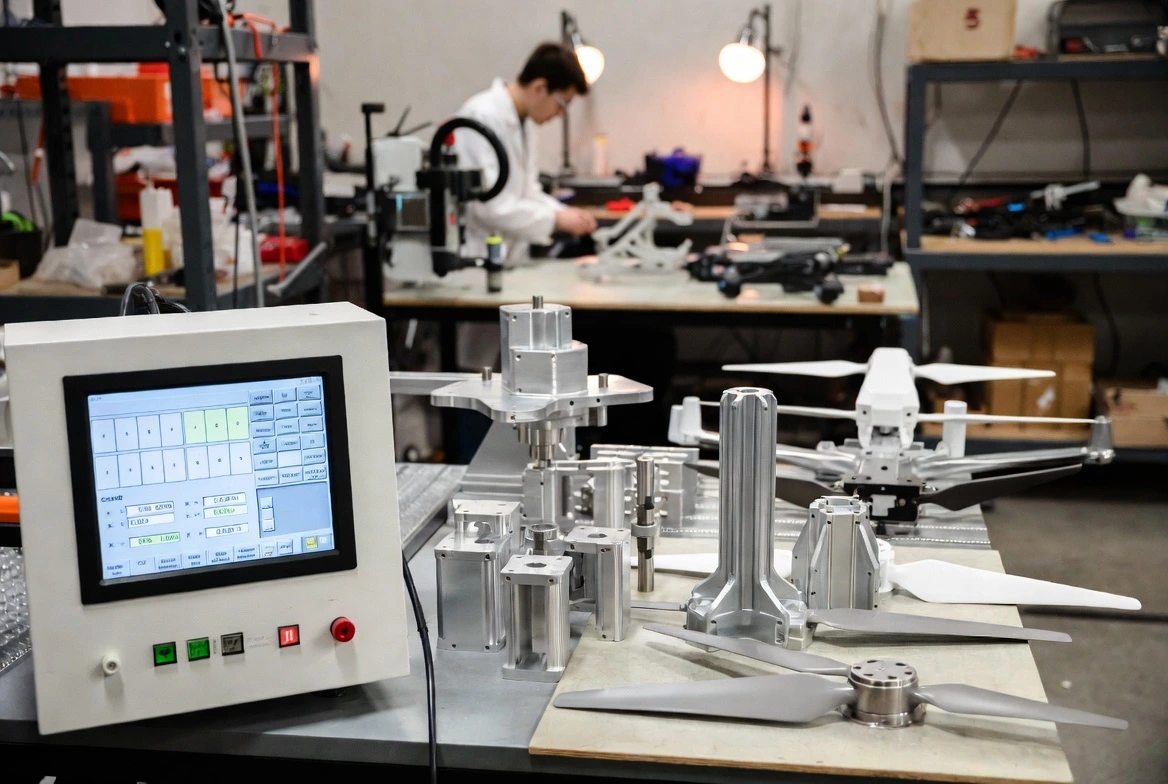
One of the most common questions from engineers is: What tolerances can China CNC suppliers typically achieve for AI drone components? At Boona, our standard CNC machining capabilities meet the demanding requirements of autonomous systems.
| Parameter | Standard Tolerance | Notes |
|---|---|---|
| Linear Dimensions | ±0.025 mm | |
| General Precision | ±0.01 mm | Achievable with advanced equipment |
| Shaft Diameters | ±0.025 mm | |
| Hole Diameters (not reamed) | ±0.02 mm | |
| Minimum Feature Size | Φ 0.50 mm | |
| Minimum Wall Thickness | 0.5 mm | Ideal for lightweight drone structures |
| Minimum End Mill Size | 0.5 mm | |
| Threads/Tapped Holes | Depth up to 3× diameter | Any specification available |
These CNC machining tolerances for autonomous drone parts ensure precise alignment of cameras, LiDAR mounts, and propulsion systems—essential for accurate AI perception and navigation.
Material Selection for Lightweight, High-Strength Drone Components
AI drone designs prioritize strength-to-weight ratio. Our CNC machining services for AI drone prototypes in China support over 100 materials, including aerospace-grade metals and engineering plastics.
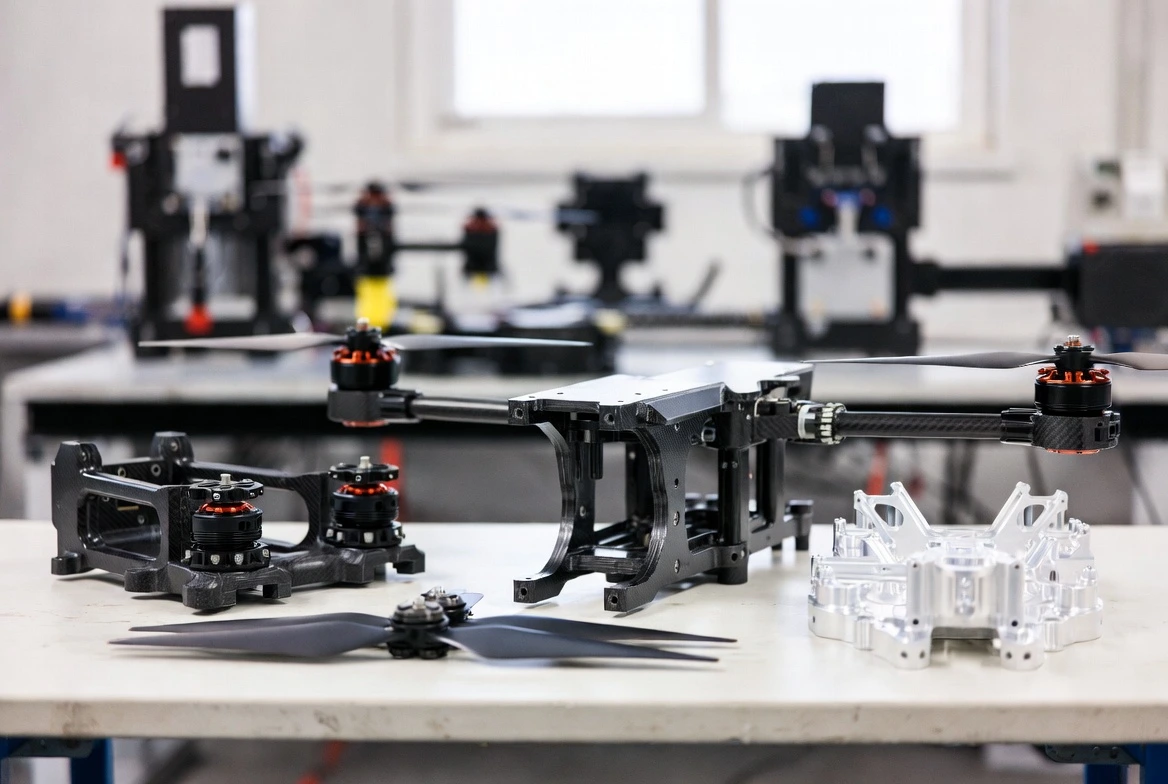
Popular Metals for Structural Components
- Aluminum (6061, 7075) – Lightweight and corrosion-resistant
- Titanium – Ultra-high strength for critical load-bearing parts
- Stainless Steel – Durable gimbal and landing gear applications
Engineering Plastics for Non-Structural Parts
- PEEK → High heat resistance for electronics housings
- Carbon Fiber Composites → Extreme stiffness-to-weight
- Nylon & POM → Low-friction motor mounts and gears
Maximum part sizes reach 4000 × 1500 × 600 mm for milling and Ø200 × 500 mm for turning—sufficient for full-scale drone frames and large payload bays.
Speed: From Design Upload to Flight-Ready Parts in Days
Time-to-market separates successful AI drone startups from the rest. Our rapid turnaround CNC prototyping for drone startups delivers parts in as little as 3 business days, with standard lead times ranging from 3–10 days depending on complexity.
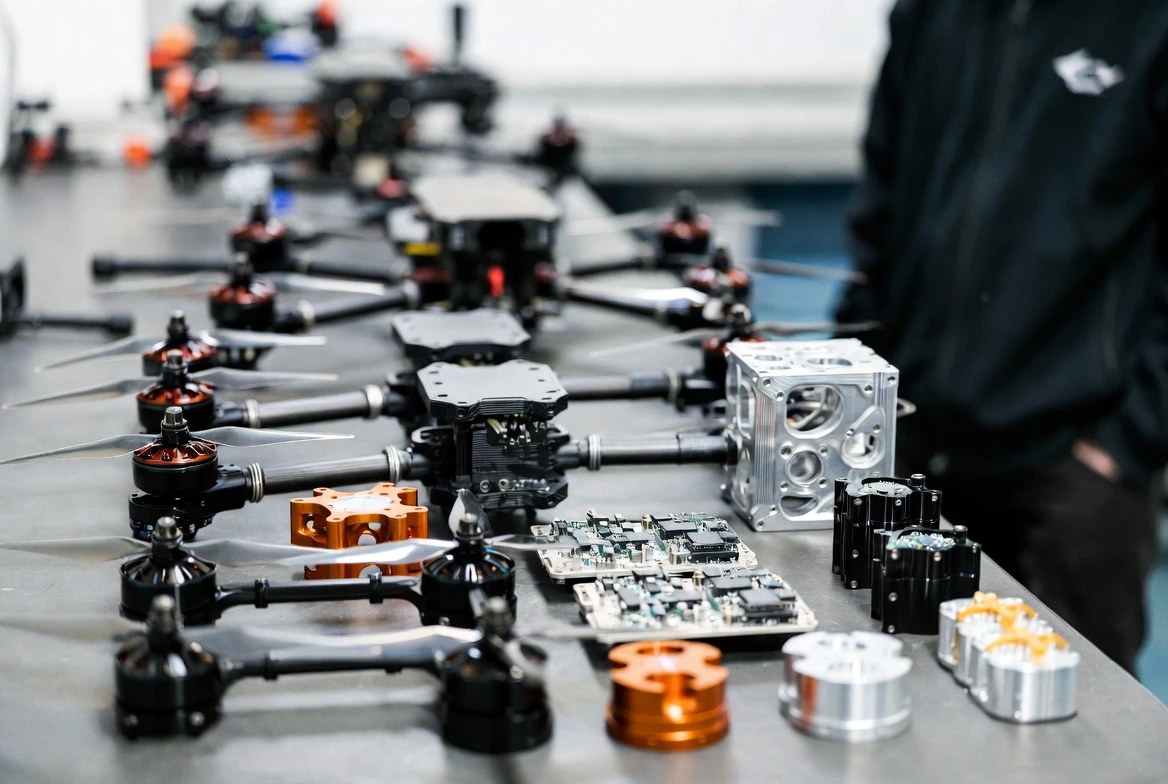
This rapid iteration cycle allows teams to:
- Test new sensor integrations
- Validate updated AI hardware configurations
- Conduct flight tests with production-like parts
All while receiving detailed inspection reports (CMM, material certification, first article inspection) for regulatory compliance and investor demonstrations.
Surface Finishing Options for Functional and Aesthetic Prototypes
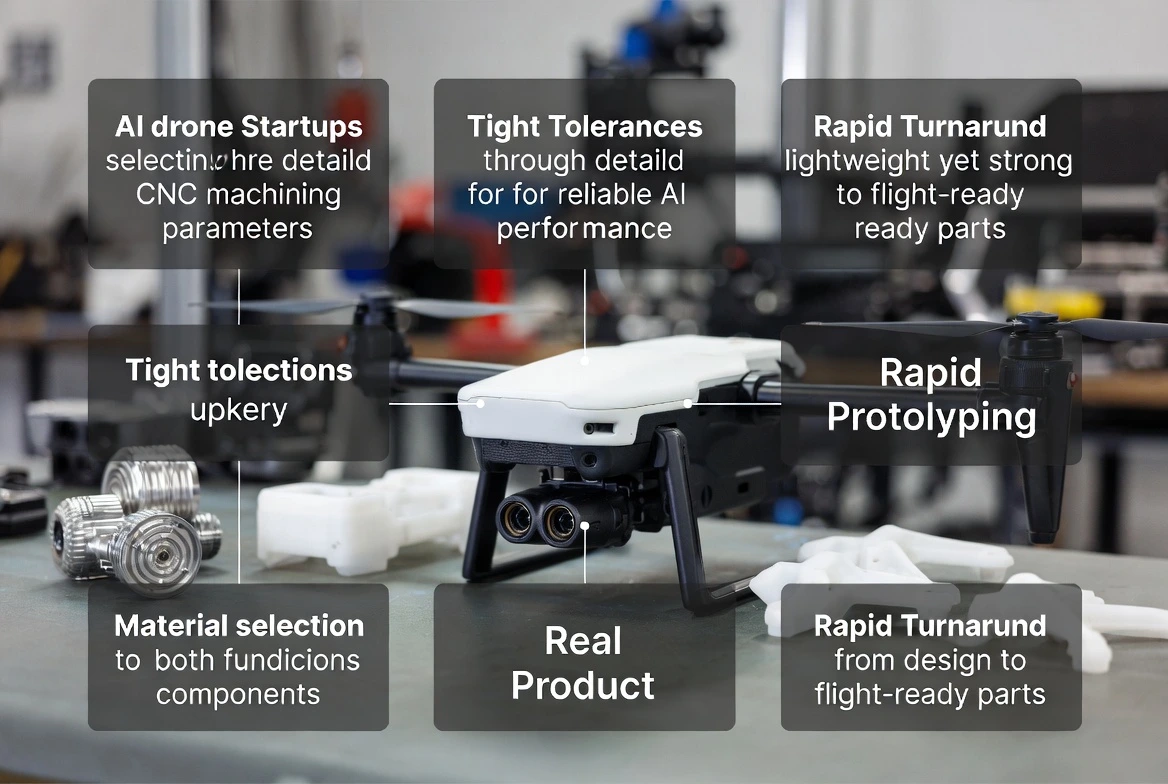
Professional finishing elevates prototypes from “shop sample” to investor-ready product.
| Finish | Appearance | Thickness Removed | Common Applications |
|---|---|---|---|
| Anodizing (Aluminum) | Matte/Gloss, Colored | 0.002–0.04 mm | Frames, aesthetic covers |
| Polishing | High Gloss | Varies | Optical sensor housings |
| Bead Blasting | Smooth Matte | None | Uniform tactical appearance |
| Powder Coating | Matte/Gloss/Textured | 0.05–0.15 mm | Weather-resistant exterior parts |
| As-Machined | Visible Tool Marks | None | Internal structural components |
Conclusion: Accelerate Your AI Drone Development with Proven CNC Expertise
Whether you’re building delivery drones, inspection UAVs, or defense-grade autonomous systems, precision CNC machining services for AI drone prototypes provide the reliability and speed needed to stay ahead in this fast-moving industry.
Ready to turn your next design into flight-ready hardware? Request a free quote today or explore our full CNC machining capabilities. Our team responds within 2 hours and offers free manufacturability analysis for every project.
At Boona Prototypes, we’re proud to power the rapid growth of AI drone innovation—one precision part at a time.
FAQs
Why do AI drone startups rely on CNC machining instead of 3D printing for functional prototypes?
CNC machining produces parts with isotropic material properties, superior surface finish, and real-world mechanical strength—critical for flight testing and validating AI algorithms like obstacle avoidance and precision navigation. While 3D printing is faster and cheaper for visual or fit-check models, it often results in weaker, anisotropic parts that cannot withstand vibration, impact, or prolonged flight stresses.
What tolerances can I expect from precision CNC machining for drone components?
Typical tolerances for high-precision CNC machining in drone applications are:
- Linear dimensions: ±0.025 mm (standard), down to ±0.01 mm with advanced equipment
- Hole diameters: ±0.02 mm
- Minimum feature size: Φ 0.50 mm
- Minimum wall thickness: 0.50 mm These tight tolerances ensure accurate sensor alignment (cameras, LiDAR, IMUs) and aerodynamic performance.
Which materials are best for CNC-machined AI drone prototypes?
Popular choices include:
- Metals: Aluminum 6061/7075 (lightweight, corrosion-resistant frames), Titanium (high-strength load-bearing parts), Stainless Steel (landing gear)
- Engineering plastics: PEEK (heat-resistant electronics housings), Carbon-fiber-filled composites (stiff, ultra-light structures), Nylon/PA-CF (low-friction gears and mounts) These materials deliver the optimal strength-to-weight ratio required for extended flight times and payload capacity.
How long does it take to get CNC-machined drone prototypes?
Reputable rapid prototyping services offer turnaround times as fast as 3 business days for simple parts, with 3–10 days typical for complex multi-axis components. This speed supports rapid iteration cycles essential for aligning hardware changes with AI software updates.
Is CNC machining cost-effective for low-volume drone prototyping?
Yes—especially for quantities of 1–100 units. Unlike injection molding, CNC requires no expensive tooling (molds can cost tens of thousands), making it ideal for early-stage startups testing multiple design variations without high upfront investment.
Can CNC machining handle complex geometries needed in compact AI drones?
Absolutely. Modern 5-axis CNC machines excel at intricate features such as thin walls, internal cooling channels, undercuts, integrated mounting points, and compact sensor bays—essential for packing GPUs, multiple cameras, and batteries into minimal space.
What surface finishes are recommended for drone prototypes?
Common options include:
- Anodizing (colored, corrosion-resistant for aluminum frames)
- Bead blasting or polishing (smooth, low-drag surfaces)
- Powder coating (weather-resistant exterior parts)
- As-machined (cost-effective for internal components) Professional finishing improves both aesthetics for investor demos and functional performance (reduced drag, better heat dissipation).
How does CNC machining support regulatory compliance and investor demonstrations?
CNC prototypes come with detailed inspection reports (CMM measurements, material certifications, first-article inspection), providing traceability needed for FAA/EASA testing and convincing proof-of-concept demonstrations.
When should a drone startup switch from CNC prototyping to higher-volume manufacturing?
Once the design is validated through flight testing and AI performance is stable, transition to injection molding or die casting for volumes above 500–1,000 units. CNC often serves as a bridge with low-volume production runs before full-scale tooling.
Where can I find reliable CNC prototyping services specialized for AI drone projects?
Look for providers with experience in aerospace-grade materials, fast turnarounds, and engineering support. Services like Boona Prototypes offer free design-for-manufacturability feedback, rapid quotes (within hours), and proven track records with robotics and autonomous systems teams.
If you have additional questions or need specific advice for your AI drone project, feel free to ask!