
As a precision manufacturing specialist who has been deep in the industry since 2001, I frequently encounter clients facing the exact same nightmare when machining high-density tungsten alloys: micro-cracks and chipping. Tungsten is renowned for its extreme density, high melting point, and excellent radiation shielding capabilities. However, its inherent brittleness means that traditional machining methods often result in costly scrap.
Today, drawing on decades of hands-on shop floor experience at our Shenzhen direct factory (which has been tackling these complex challenges since we established BOONA Prototypes in 2004), I want to dive deep into why your project requires professional custom tungsten alloy CNC services, and exactly how we utilize precise parameter control, specialized tooling, and thermal management to eradicate micro-cracking at the source.
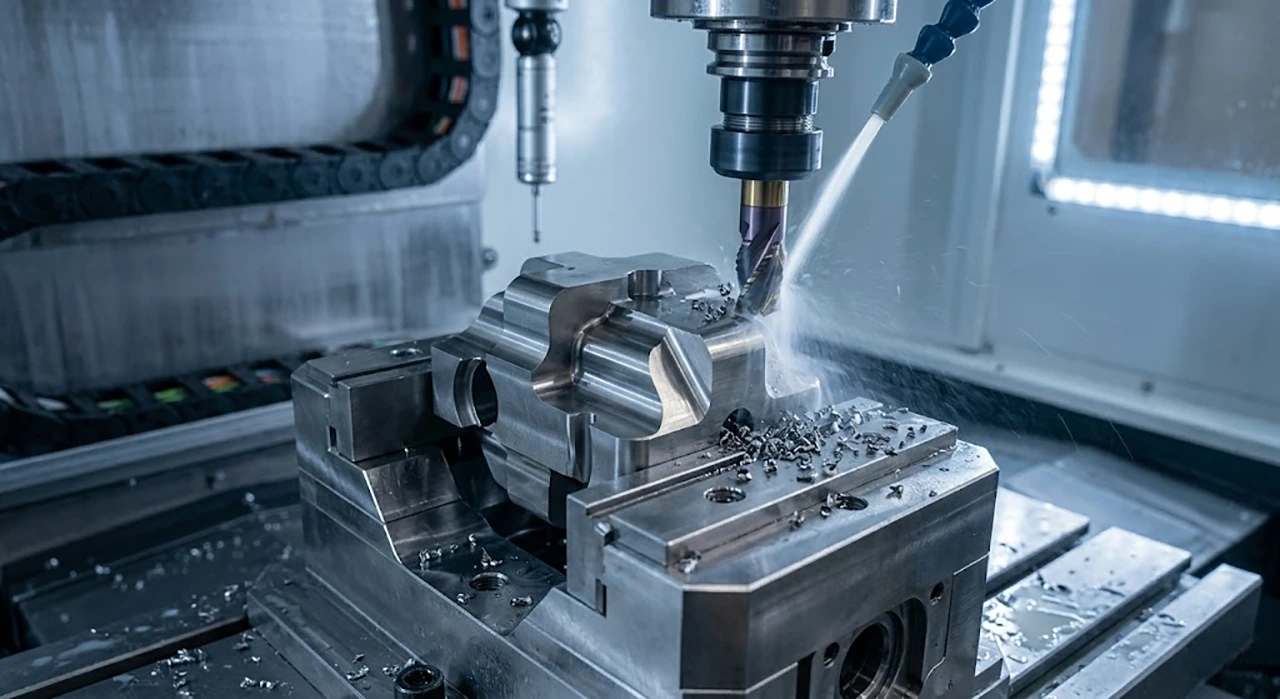
Why Are Tungsten Alloys So Prone to Cracking During CNC Machining?
Tungsten has an exceptionally high ductile-brittle transition temperature (DBTT). When standard CNC machines cut this material using conventional speeds and feed rates, the cutting zone experiences immense mechanical stress and extreme thermal shock. This instantaneous cycle of thermal expansion and contraction, combined with physical tearing, directly causes microscopic fissures along the grain boundaries of the material that are often invisible to the naked eye.
If you are curious about how we handle the unique metallurgical challenges of other complex materials (including titanium, magnesium, and specialized alloys), you can explore our comprehensive All CNC Metals machining services.
The Core of Preventing Micro-Cracks: Custom CNC Parameters & Data
To achieve zero micro-cracks in tungsten machining, the industry’s best practices can be summarized in four principles: “low speeds, stable feeds, micro-depths, and high-pressure cooling.” Below is an optimized machining parameter chart derived from hundreds of real-world test runs in our facility. These data points dictate the final structural integrity of tungsten components.
Core CNC Milling Parameters for Tungsten Alloys (W-Ni-Fe / W-Ni-Cu)
| Machining Parameters | Standard Steel (Reference) | Optimized Tungsten Alloy CNC Services | Core Crack-Prevention Mechanism |
| Cutting Speed (Vc) | 100 – 150 m/min | 30 – 50 m/min | Drastically reduces heat accumulation, preventing thermal shock and surface crazing. |
| Feed per Tooth (fz) | 0.1 – 0.2 mm/rev | 0.02 – 0.05 mm/rev | Significantly lowers cutting force, avoiding grain fracture caused by physical compression. |
| Depth of Cut (Ap) | 2.0 – 5.0 mm | 0.2 – 0.5 mm (Micro-cutting) | Minimizes overall mechanical stress, ensuring smooth tool entry and exit. |
| Coolant Pressure | 20 – 50 Bar | > 70 Bar (High-Pressure Through-Coolant) | Instantly dissipates heat from the cutting zone and flushes chips, preventing secondary scratching. |
| Tool Material | Standard Carbide | Ultra-Fine Grain Solid Carbide (with TiAlN Coating) or PCD | Maintains extreme edge sharpness and wear resistance, achieving a clean “shear” rather than “tearing.” |
(Note: The above parameters are not static; our programmers dynamically adjust them based on the specific tungsten alloy grade and the unique geometry of your part.)
Our Expert Solutions: Going Beyond Just Changing Parameters
Manufacturing services that truly meet Google’s E-E-A-T standards cannot rely on theory alone. In our daily, high-efficiency production runs, we deploy several proven strategies to deliver top-tier precision CNC machining for tungsten parts:
-
Custom Fixturing & Absolute Rigidity
Any microscopic machine or fixture vibration (chatter) will be amplified into catastrophic cracks on brittle tungsten parts. We design bespoke, heavy-duty workholding to ensure the part is fully supported from all angles. For extremely complex geometries, we utilize 5 Axis CNC Machining to machine the part in a single setup, drastically reducing cumulative tolerances and the secondary stress caused by repeated re-fixturing.
-
Rigorous Non-Destructive Testing (NDT)
Micro-cracks often hide just below the surface. Operating under a strict ISO 9001 certification, our quality control leaves no blind spots. Beyond standard dimensional checks using Coordinate Measuring Machines (CMM), we employ Dye Penetrant Inspection (DPI) and even ultrasonic testing to verify both surface and internal structural integrity. You can learn more about our uncompromising Quality Control inspection processes.
-
Strategic Use of Alternative Machining Modalities
If, during the early Design for Manufacturability (DFM) review, we identify ultra-thin walls or features that are highly susceptible to cracking, our engineers will recommend Wire Electrical Discharge Machining (WEDM) or Sinker EDM as an alternative or supplementary process. This zero-contact machining method completely eliminates mechanical stress, making it ideal for the most intricate tungsten features.
Conclusion
Machining heavy tungsten alloys is a zero-margin-for-error challenge. Partnering with a battle-tested custom CNC prototyping China manufacturer not only saves you from exorbitant raw material waste but ensures absolute reliability for your final products in mission-critical aerospace, defense, and medical radiology applications.
Whether you need low-volume prototyping for medical device testing or high-volume production, the engineering team at BOONA Prototypes is ready to support you.
Ready to advance your most challenging metal machining project? Reach out to Contact Us for a Free Quote and DFM Analysis today. Our experts will respond within 2 hours with a comprehensive manufacturing strategy.
FAQs
Why does tungsten crack so easily during traditional CNC machining?
Tungsten has an incredibly high “Ductile-Brittle Transition Temperature” (DBTT). At room temperature, it behaves like glass rather than standard metal. When subjected to the high-speed impact and intense heat of standard CNC cutting tools, the material experiences localized thermal shock and mechanical tearing. This combination forces the crystalline structure to fracture along its grain boundaries, resulting in micro-cracks.
What makes “Custom” CNC services different from standard machining for tungsten?
Standard machining prioritizes speed and volume, using generic speeds and feeds that generate massive heat. Custom tungsten CNC services reverse this approach. The process is specifically tailored to the alloy’s metallurgy, utilizing extremely low cutting speeds, micro-depths of cut, specialized tool geometries to shear rather than tear, and high-pressure through-coolant systems to immediately dissipate heat.
Can a tungsten part with micro-cracks be repaired or salvaged?
Generally, no. Because tungsten is often used in high-stress, extreme-temperature, or radiation-shielding environments, structural integrity is paramount. Micro-cracks act as stress concentrators; under operational loads, these tiny fissures will propagate and lead to catastrophic failure. If a micro-crack is detected, the part is almost always rejected as scrap, which is why prevention is the only viable strategy.
What are the best cutting tools for machining tungsten alloys?
Standard high-speed steel (HSS) or basic carbide tools will dull almost instantly when cutting tungsten, leading to friction and cracking. The best results require Ultra-Fine Grain Solid Carbide tools (often with a Titanium Aluminum Nitride – TiAlN – coating for heat resistance) or Polycrystalline Diamond (PCD) inserts. These tools maintain a razor-sharp edge longer, ensuring the material is cleanly sheared.
Are there alternative manufacturing methods if a tungsten part design is too fragile for CNC milling?
Yes. If a part features extremely thin walls or complex internal geometries that cannot withstand the physical pressure of a cutting tool, engineers will pivot to Electrical Discharge Machining (EDM). Methods like Wire EDM (WEDM) or Sinker EDM use electrical sparks to erode the tungsten. Because it is a zero-contact process, it introduces absolutely zero mechanical stress, completely eliminating the risk of physical cracking.
How do you detect micro-cracks if they are invisible to the naked eye?
Visual inspection is highly unreliable for tungsten. Quality control requires Non-Destructive Testing (NDT) protocols. The most common methods include:
-
Dye Penetrant Inspection (DPI): A fluorescent liquid is applied to the surface, which seeps into microscopic surface cracks and glows under UV light.
-
Ultrasonic Testing: High-frequency sound waves are sent through the part to detect internal, subsurface anomalies.
-
Radiography (X-Ray): Used for highly critical aerospace or medical components to verify internal density and structural perfection.
Does the specific grade of tungsten alloy affect the machining strategy?
Absolutely. Pure tungsten is the most brittle and difficult to machine. Tungsten Heavy Alloys (WHAs), which are alloyed with nickel-iron (W-Ni-Fe) or nickel-copper (W-Ni-Cu), act as a “binder” matrix that slightly improves machinability and ductility. The CNC programming (speeds, feeds, and tool selection) must be explicitly calibrated to the exact chemical composition of the alloy being cut.