
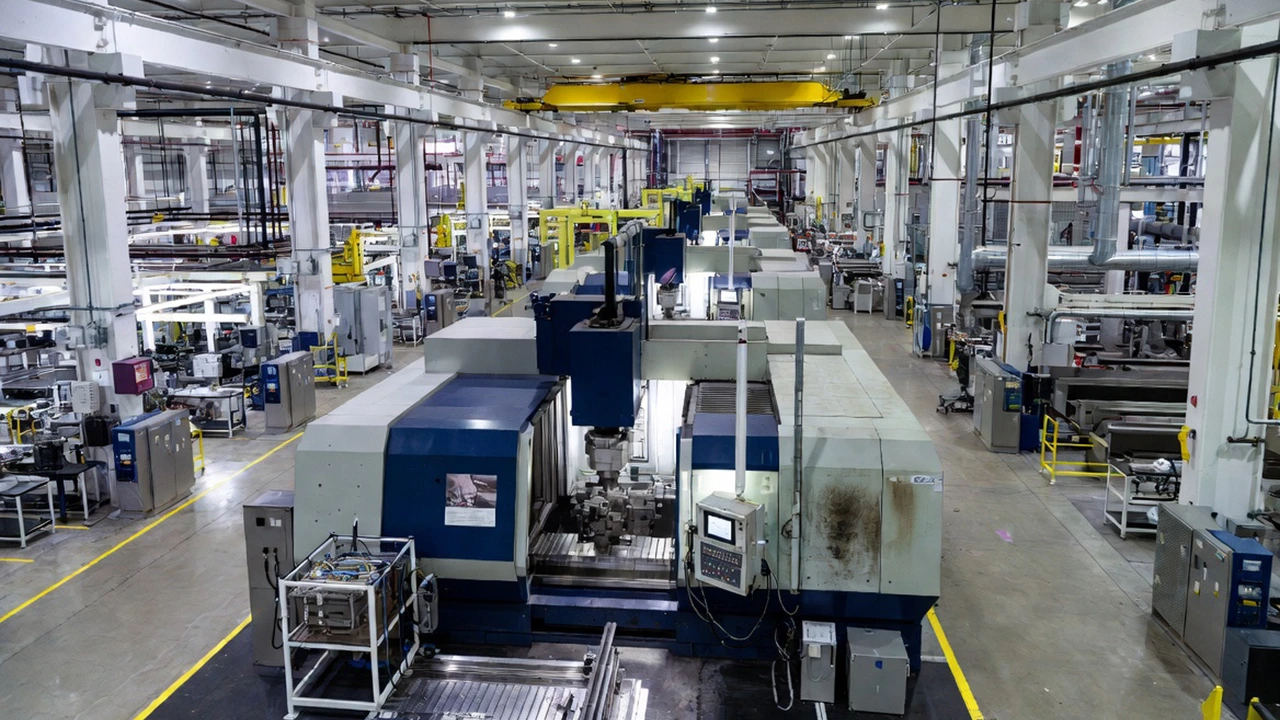
In the traditional world of aerospace and manufacturing, the mantra was always “measure twice, cut once.” It was a cautious, slow dance that often resulted in lead times measured in months. Then came SpaceX. They flipped the script by treating hardware development like software—iterating rapidly, failing fast, and releasing updates constantly. They didn’t just build better rockets; they built a better “Machine that makes the Machine.”
For manufacturers and engineers today, the lesson is clear: Speed is the new currency.
At Boona Prototypes, we see this shift every day. Whether you are developing medical devices or automotive components, you don’t have to build rockets to benefit from the SpaceX philosophy. Here is how we apply these high-velocity standards to your projects using our Rapid Prototyping Services.
The 80% Rule: Speed Over Perfection
SpaceX famously manufactures about 80-90% of their vehicle value in-house. Why? To avoid the “vendor lock-in” that creates delays. When you outsource every tiny process to a different vendor, you lose days in shipping and communication.
At Boona, we emulate this Vertical Integration by offering a “One-Stop Service Solution.” We don’t just cut the metal; we handle the finishing, the fit-checks, and the assembly logic under one roof. This allows us to cut lead times drastically compared to traditional machine shops.
Table 1: Traditional vs. Agile Manufacturing Timelines
| Development Phase | Traditional Shop | Boona (Agile Model) | Time Saved |
| Quote Generation | 2–5 Days | Instant / Same Day | ~3 Days |
| DFM Feedback | Post-Order (Reactive) | Pre-Order (Proactive) | Varies |
| Machining Lead Time | 3–4 Weeks | As fast as 3 Days | 2+ Weeks |
| Iteration Cycle | 1 Month per version | 1 Week per version | 75% Reduction |
Learn more about our fast-turnaround CNC Machining Services.
Material Mastery: Taming “Unobtainium”
SpaceX engineers routinely work with proprietary superalloys (like Inconel SX500) that are notoriously difficult to machine. These materials are heat-resistant, hard, and unforgiving. To process them, a shop needs high-rigidity 5-axis machines and advanced tooling strategies.
We apply this same rigor to our material selection. Boona does not shy away from the “tough stuff.” We routinely machine aerospace-grade Titanium (Ti-6Al-4V), Stainless Steel 316L, and high-performance polymers like PEEK.
Technical Insight: Machining Parameters for Exotic Alloys
Processing these materials requires precise control over cutting speeds (Surface Feet per Minute – SFM) to prevent work hardening.
| Material | Hardness (Typical) | Rec. Cutting Speed (SFM) | Challenge Level |
| Aluminum 6061 | 95 HB | 600 – 1200 | Low |
| Stainless 316L | 160 HB | 180 – 250 | Medium |
| Titanium Ti-6Al-4V | 334 HB | 120 – 160 | High (Heat Generation) |
| Inconel 718 | 360+ HB | 40 – 60 | Extreme (Work Hardening) |
Explore our full range of metals and plastics in the Boona Material List.
DFM: Breaking the Wall Between Design and Floor
In the SpaceX ecosystem, machinists sit directly with design engineers. If a part has a feature that is unnecessarily expensive to machine, it is flagged immediately. This is Design for Manufacturing (DFM) in real-time.
Boona adopts this by providing DFM feedback before you pay. When you upload your 3D CAD files, our engineers review them for:
-
Deep pockets that require long, chattering tools.
-
Sharp internal corners that require EDM (Electrical Discharge Machining) instead of standard milling.
-
Over-tolerancing (e.g., asking for ±0.005mm on a non-critical surface).
The Boona Standard: We prioritize functionality. We help you distinguish between “micron-perfect” mating surfaces and structural features that can be machined faster with looser tolerances.
The “Test-Rich” Quality Model
SpaceX relies on physical testing—burst tests and static fires—rather than just paper documentation. They subscribe to a “Fail Fast” mentality where a part is pushed to its limit to verify the design.
While we are an ISO 9001:2015 and ISO 13485:2016 (Medical) certified facility, we believe that certification is the floor, not the ceiling. We utilize automated metrology on the shop floor to ensure that the physical part matches the digital truth of your CAD file.
-
CMM Inspection: For verification of complex geometries.
-
In-Process Probing: Correcting tool wear in real-time.
By moving Quality Control (QC) from a separate “lab” to the production flow, we catch deviations instantly—ensuring your prototype works the first time.
Review our certifications and standards at Boona Quality Control.
Conclusion: From Idea to Metal
The future of manufacturing isn’t about who has the biggest machine; it’s about who has the shortest path from “Idea” to “Metal.” By embracing agility, mastering difficult materials, and integrating quality into the speed of production, Boona Prototypes helps you iterate faster and launch sooner.[1][2]
Ready to launch your project?
Stop waiting for legacy lead times. Upload your CAD files today and get a quote in hours, not days.
FAQs
How does the “Agile Hardware” approach differ from a traditional machine shop?
Traditional shops often operate on a “Waterfall” model—waiting for finalized, perfect drawings before ordering material, which can take weeks.[1] At Boona, we adopt an Agile Manufacturing mindset similar to SpaceX.[1] We prioritize speed and iteration. This means we can start with a “Minimum Viable Product” (MVP) prototype, deliver it in as little as 3 days, and help you refine the design based on real-world testing rather than just theoretical models.
Can you really handle the “Unobtainium” materials mentioned in the article?
Yes. While we process standard aluminum and plastics daily, our facility is equipped for high-performance superalloys.[1] We routinely machine Inconel 718, Titanium (Ti-6Al-4V), and Stainless Steel 17-4PH.[1] Our tooling and 5-axis machines are set up to handle the high heat and work-hardening properties of these materials without compromising tool life or precision.
-
See our full Material List for detailed specifications.
What are your standard lead times for CNC parts?
For standard rapid prototyping orders, we can ship parts in 3 business days.
-
Rapid CNC: 3–5 days (depending on geometry).
-
3D Printing (SLA/SLS): 2–3 days.
-
Sheet Metal: 3–7 days.
By vertically integrating our finishing services (like anodizing and powder coating), we avoid the delays caused by sending parts out to third-party vendors. -
Check our Rapid Prototyping Services for more details.
Does “Fail Fast” mean you sacrifice quality?
Absolutely not. “Fail Fast” refers to the design iteration speed, not the manufacturing quality.[1] Your parts will meet strict GD&T specifications. We back this up with ISO 9001:2015 and ISO 13485:2016 (Medical Devices) certifications.[2][3] We use automated CMM (Coordinate Measuring Machines) to verify critical dimensions before the part leaves our floor.
-
Review our certifications at Quality Control.
I have a design, but I’m not sure if it’s machinable. Can you help?
Yes. Just like the “Design for Manufacturing” (DFM) feedback loop used by top aerospace companies, our engineers review your CAD files immediately upon receipt. If we see features that will drive up costs or cause failure (like deep square pockets or impossible undercuts), we will suggest specific design changes to optimize the part for our 5-axis machines or Turn-Mill centers.
Do you offer the “One-Stop” services mentioned in the SpaceX strategy?
Yes. To reduce supply chain risks, we handle the vast majority of production steps in-house.[1]
-
Machining: CNC Milling & Turning.
-
Fabrication: Sheet Metal bending & stamping.
-
Finishing: Anodizing, chromating, painting, and laser engraving.
-
Assembly: Helicoil installation and sub-assembly.
This “Machine that makes the Machine” approach ensures we control the timeline from start to finish.
How do I get a quote?
You don’t need to wait days for an estimator to call you back. Upload your 3D CAD files (STEP, IGES, X_T) to our portal, and our team will provide a quote and DFM analysis rapidly.