
When a custom part fails, people often look at strength first.
Was the material strong enough?
Was the wall too thin?
Was the tolerance too tight?
Was the load higher than expected?
Those questions matter. But in many real manufacturing problems, the issue is not only strength. It is material ductility.
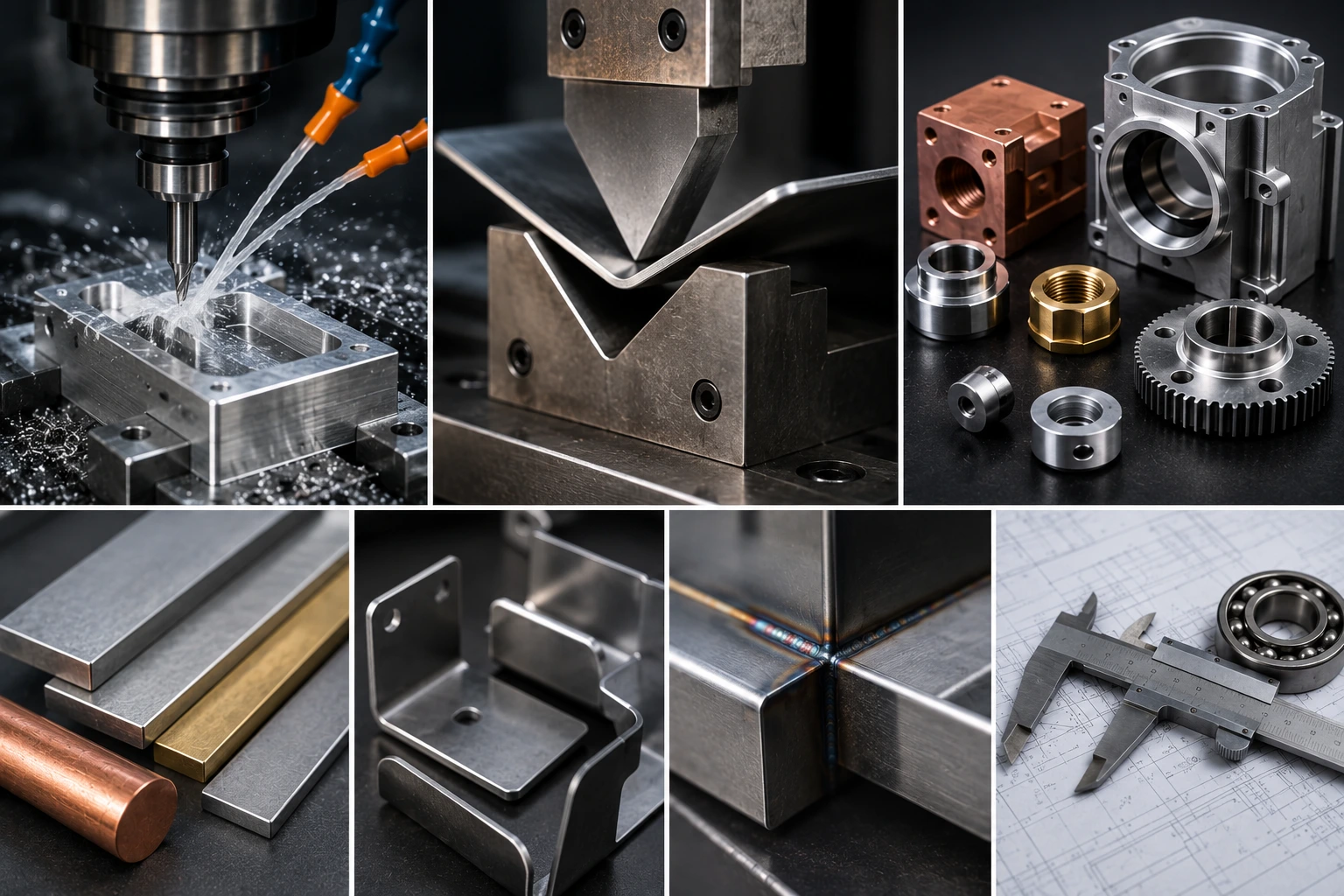
Ductility tells you how much a material can deform before it cracks or breaks. That sounds simple, but it affects almost every part of custom manufacturing: bending, stamping, CNC machining, welding, deburring, surface finish, assembly, and even how a part fails in service.
A ductile material can bend, stretch, or deform before breaking. A brittle material may crack suddenly with little warning. Neither one is always better. The right choice depends on the part, the process, and the way the part will be used.
For engineers and buyers ordering custom CNC machined parts or sheet metal fabricated parts, understanding ductility helps avoid cracking, heavy burrs, poor surface finish, springback, deformation, and unnecessary cost.
What Ductility Means in Practical Manufacturing Terms
In a textbook, ductility is often described as the ability of a material to plastically deform before fracture. In the workshop, people usually see it in simpler ways.
A ductile sheet bends instead of cracking.
A ductile machined part may create long stringy chips.
A ductile edge may form burrs instead of breaking cleanly.
A ductile bracket may deform before it fails.
A low-ductility part may chip, crack, or snap suddenly.
This is why ductile vs brittle materials in manufacturing is not just a theory topic. It changes how a manufacturer cuts, bends, holds, finishes, and inspects the part.
A quick comparison helps:
| Property | What It Means | Manufacturing Impact |
|---|---|---|
| Ductility | Ability to deform before breaking | Affects bending, forming, burrs, and failure behavior |
| Strength | Ability to resist load | Affects part performance under force |
| Hardness | Resistance to indentation and wear | Affects tool wear and scratch resistance |
| Toughness | Ability to absorb energy before fracture | Affects impact and vibration performance |
A material can be strong but not very ductile. It can also be soft and very ductile, like pure copper. That is why material selection should never be based on one property alone.
Boona’s material list is useful at the early stage because custom parts often require a balance of strength, conductivity, corrosion resistance, machinability, finish, and cost.
Ductility Changes How a Part Is Machined
In CNC machining, ductility affects chip formation and edge quality.
Highly ductile metals such as copper, some aluminum grades, and softer stainless steels tend to produce continuous chips. If the tool is sharp and the cutting condition is stable, this is manageable. If not, the material may smear, stick to the tool, or create burrs.
A brittle material behaves differently. It may break into short chips, but it can chip at the edge, crack near thin walls, or fail at sharp internal corners.
This is why ductility in CNC machining often shows up as a shop-floor problem, not a drawing problem.
| Material Behavior | Common CNC Issue | Practical Response |
| Very ductile | Long chips, smearing, heavy burrs | Sharp tools, good coolant, chip control |
| Medium ductility | Stable cutting | Balanced speeds and feeds |
| Low ductility | Edge chipping, cracking | Avoid sharp corners and vibration |
| Work-hardening ductile alloy | Tool wear, heat, poor finish | Rigid setup, correct tool coating, steady feed |
Pure copper is a good example. It is very ductile, which is useful for electrical and thermal parts. But on the machine, that same ductility can create long chips, built-up edge, and burrs. For this reason, copper CNC machining needs sharp tools, proper coolant, and careful finishing.
Stainless steel is another example. 304 stainless has good ductility, but it can work-harden during machining. If the tool rubs instead of cutting, the surface becomes harder and more difficult to machine. Titanium alloys are not extremely ductile, but they are strong and heat-resistant, which creates a different machining challenge.
So when a drawing says “Aluminum,” “Copper,” or “Stainless Steel,” the manufacturer still needs to know the actual grade and condition. Ductility can change a lot between material grades and tempers.
Ductility Matters Even More in Sheet Metal Bending
For sheet metal parts, ductility is often the difference between a clean bend and a cracked part.
A ductile sheet can stretch around the outside of the bend without breaking. A less ductile sheet needs a larger bend radius. If the bend radius is too tight, cracks may appear on the outer surface. Sometimes the crack is obvious. Sometimes it is small and only appears after finishing, vibration, or assembly.
This is why ductility and bend radius in sheet metal should be considered early in design.
| Sheet Material | Typical Forming Behavior | Bend Design Note |
| Aluminum 5052 | Good ductility | Often suitable for bent enclosures and brackets |
| Aluminum 6061-T6 | Lower formability than 5052 | Needs larger bend radius to reduce cracking |
| Mild steel | Good ductility | Common for general brackets and chassis |
| Stainless steel 304 | Ductile but stronger | Higher forming force and more springback |
| Copper | Very ductile | Easy to bend but marks easily |
| Brass | Moderate ductility | Depends strongly on alloy and temper |
A practical mistake is choosing 6061-T6 aluminum for a bent enclosure because it is popular in CNC machining. 6061 is excellent for many machined parts, but it is not always the best first choice for tight sheet metal bends. 5052 is often easier to form.
For custom sheet metal fabrication, material grade and bend radius should be discussed before the drawing is finalized. A small design change can prevent cracking, reduce scrap, and make the part easier to manufacture.
Ductility Also Affects Springback
Ductile materials do not simply bend and stay exactly where the tool pushes them. After bending, they spring back slightly.
Springback depends on material type, thickness, bend radius, grain direction, and strength. Stainless steel usually springs back more than mild steel. Aluminum and copper behave differently depending on temper.
This matters when the part has tight angle requirements, mating surfaces, or assembly features. A bracket that springs back too much may not sit flat. An enclosure may not close properly. A formed cover may need extra adjustment.
Typical sheet metal tolerances also vary by process. Laser-cut features can usually be controlled more tightly than formed dimensions. Bending involves material behavior, tooling, and springback, so it naturally has a wider tolerance range than flat cutting.
A useful way to think about it:
| Process Area | Why Ductility Matters |
| Laser cutting | Less affected by ductility, more by thickness and cutting quality |
| Bending | Strongly affected by ductility and springback |
| Stamping | Strongly affected by ductility, tearing, and thinning |
| Welding | Affected by cracking risk and heat distortion |
| Deburring | Ductile edges may smear or form larger burrs |
This is one reason drawings should not apply the same tolerance expectation to every feature. A laser-cut hole and a formed flange are not controlled in the same way.
Ductility Can Create Burrs and Surface Finish Problems
Highly ductile materials are often forgiving in forming but less friendly during finishing.
Soft copper, soft aluminum, and some stainless steels may form burrs instead of breaking cleanly. The burr is not just a cosmetic issue. It can interfere with assembly, affect electrical contact, cut operators’ hands, or make inspection unreliable.
Ductility also affects surface finish. A ductile material may smear during machining or polishing. A brittle material may chip instead of smear. Both problems need different solutions.
For example:
| Material Type | Surface / Edge Issue | Better Manufacturing Approach |
| Pure copper | Smearing, scratches, burrs | Sharp tools, clean coolant, gentle deburring |
| Soft aluminum | Built-up edge, cosmetic marks | Polished tools and controlled finishing |
| Stainless steel | Work hardening and edge burrs | Rigid setup and proper tool engagement |
| Brittle plastics | Chipping at edges | Larger radii and careful cutting |
| Hard brittle metals | Edge fracture | Avoid sharp corners and heavy vibration |
This is where surface finishing becomes part of the material decision. A part that looks easy in CAD may need brushing, polishing, bead blasting, anodizing, plating, or powder coating after manufacturing. The more ductile or softer the material is, the more carefully finishing must be controlled.
Material Ductility and Part Design Go Together
Ductility should influence the geometry of the part.
A brittle material should not be designed with sharp internal corners, thin unsupported walls, or sudden section changes. Those details increase stress concentration and cracking risk.
A highly ductile material can tolerate more deformation, but that does not mean the design can ignore manufacturability. Very ductile materials may bend out of shape during machining, distort during clamping, or create large burrs around thin edges.
For custom part material selection, the design should consider:
- bend radius
- wall thickness
- internal fillets
- hole-to-edge distance
- threaded features
- thin ribs or tabs
- surface finish areas
- welding and joining methods
- expected load and vibration
- whether deformation before failure is acceptable
If a part must bend during use, ductility is useful. If a part must stay extremely flat and rigid, too much deformation may be a problem. The best material is not always the most ductile one. It is the one that matches the function and process.
How Ductility Affects Welding and Joining
Welding changes the local condition of the material. Heat can reduce strength, change ductility, and create distortion. Some materials tolerate welding well. Others may crack, warp, or need post-weld treatment.
Ductility also matters for mechanical joining.
A ductile material may deform around a rivet or press-fit feature. That can help create a secure joint, but it can also bulge thin walls. A brittle material may crack around the same hole.
| Joining Method | Ductility Concern |
| Welding | Heat distortion, cracking, and heat-affected zone changes |
| Riveting | Hole deformation or cracking |
| Press-fit | Ductile parts may deform; brittle parts may split |
| Threaded inserts | Thin ductile walls may bulge |
| Adhesive bonding | Surface preparation often matters more than ductility |
For custom assemblies, joining should not be left until the end. If the part will be welded, bent, riveted, or press-fit, material ductility should be part of the first design discussion.
Typical Ductility Ranges for Common Manufacturing Materials
Ductility is often measured as elongation at break. The values below are practical reference ranges only. Actual values depend on alloy, temper, heat treatment, thickness, supplier, and testing standard.
| Material | Typical Ductility Level | Approx. Elongation Range | Manufacturing Notes |
| C110 copper | Very high | 30–50%+ | Excellent conductivity, but gummy machining and burrs |
| Aluminum 5052 | Good | 12–25% | Good for sheet metal bending |
| Aluminum 6061-T6 | Moderate | 8–17% | Good for CNC machining, less ideal for tight bends |
| Mild steel | Good | 20–30%+ | Common for brackets and formed parts |
| Stainless steel 304 | High | 35–55% | Ductile but work-hardens |
| Stainless steel 17-4 PH | Lower after aging | 5–15% | Strong, but less formable in hardened condition |
| Brass | Moderate | 15–35% | Easier to machine than pure copper |
| Titanium Ti-6Al-4V | Moderate | 8–14% | Strong and light, but machining is demanding |
| ABS plastic | Moderate | Varies widely | Good impact resistance |
| Some SLA resins | Low to moderate | Varies widely | Can be brittle depending on resin type |
This table should not replace a material datasheet, but it helps explain why one material bends easily while another cracks, or why one material machines cleanly while another creates stringy chips.
For production decisions, always confirm the exact grade and condition. “Stainless steel” is not enough. “304 stainless annealed” and “17-4 PH H900” behave very differently.
Ductility Can Reduce or Increase Cost
High ductility sounds positive, but it can increase cost in some processes.
Copper is very ductile, but it may require more chip control, sharper tools, and careful deburring. Stainless steel can be ductile, but it may work-harden and increase tool wear. Soft aluminum can form easily, but cosmetic surfaces may scratch or mark during handling.
Low ductility can also increase cost. Cracking during bending, chipped edges, larger bend radii, and higher scrap rates all affect price.
| Ductility-Related Issue | Cost Impact |
| Long chips in CNC machining | Slower machining and chip control |
| Heavy burrs | More deburring labor |
| Cracking during bends | More scrap or redesign |
| Springback | Tooling adjustment and angle control |
| Surface smearing | Extra finishing or polishing |
| Work hardening | More tool wear and setup control |
| Brittle edge chipping | Slower cutting and design changes |
| Special inspection | More QC time |
This is why a cheaper raw material does not always make a cheaper part. A material that is difficult to machine, bend, weld, or finish can cost more in the final quote.
How to Choose a Material Based on Ductility
A simple way to start is to look at the part’s main manufacturing process.
If the part will be bent, ductility and bend radius matter early. If it will be CNC machined, ductility affects chips, burrs, and surface finish. If it will be welded, ductility after heating matters. If it will be used under impact or vibration, ductile failure may be safer than brittle fracture.
Ask these questions before choosing the material:
| Design Question | Why It Matters |
| Does the part need to bend or form? | Low ductility may cause cracking |
| Will the part be CNC machined? | Ductility affects chips, burrs, and finish |
| Is the surface cosmetic or functional? | Soft ductile materials mark easily |
| Will the part be welded? | Heat may change ductility and cause distortion |
| Will it face impact or vibration? | Brittle materials may fail suddenly |
| Are there thin walls or sharp corners? | Cracking or deformation risk increases |
| Is conductivity required? | Copper may be needed despite machining difficulty |
| Is corrosion resistance required? | Stainless steel or coated materials may be better |
| Is low-volume production planned? | Process flexibility matters |
For prototypes, it is often worth testing the real material if performance matters. A 3D printed plastic sample may prove shape and ergonomics, but it will not show how a bent aluminum bracket, copper contact, or stainless steel part behaves in final use.
What to Send When Requesting a Quote
A good RFQ should not only include the CAD file. If ductility may affect manufacturing, add the material condition and process requirements clearly.
For example, if you need a bent aluminum part, specify whether 5052 or 6061 is required. If you need a copper electrical part, specify C101 or C110. If you need stainless steel, state whether the part is 304, 316, or 17-4 PH and whether heat treatment is required.
A useful RFQ should include:
- 3D CAD file
- 2D drawing
- material grade and temper
- required manufacturing process
- bend radius or forming requirements
- surface finish requirements
- welding or joining requirements
- tolerance requirements
- quantity
- functional use of the part
- crack-free, burr-free, or cosmetic requirements
- inspection report needs
For parts that need both precision and appearance, quality control should be discussed early. Ductility-related problems are often visible at the edge, bend, surface, or joint. These are exactly the areas that need clear inspection expectations.
Final Thoughts
Material ductility affects custom part manufacturing in ways that are easy to underestimate. It changes how a part bends, how it machines, how it forms burrs, how it handles welding, how it takes surface finishing, and how it fails under stress.
High ductility is not always good. Low ductility is not always bad. The right answer depends on what the part must do and how it will be made.
For a bent sheet metal bracket, ductility may prevent cracking. For a pure copper connector, it may create machining and burr challenges. For a stainless steel housing, it may affect springback and forming force. For a brittle plastic prototype, it may limit thin walls and sharp corners.
The safest approach is to choose the material and manufacturing process together. If the design needs CNC machining, sheet metal bending, welding, polishing, or tight inspection, ductility should be part of the discussion before production starts.
For teams developing prototypes or low-volume parts, working with an experienced custom manufacturer can help avoid material mismatch, cracking, deformation, burrs, and unnecessary cost before the part reaches production.
FAQs
What does material ductility mean in custom manufacturing?
Material ductility is the ability of a material to deform, bend, or stretch before it breaks. In custom manufacturing, ductility affects how a part behaves during CNC machining, sheet metal bending, forming, welding, assembly, and real-world use. A ductile material may bend before failure, while a brittle material may crack with little warning.
Why is ductility important when choosing materials for custom parts?
Ductility helps determine whether a material can be bent, formed, machined, or joined without cracking or deforming too much. For custom part material selection, it affects bend radius, wall thickness, burr formation, surface finish, springback, welding behavior, and failure risk. Choosing a material only by strength or price can lead to manufacturing problems later.
How does ductility affect CNC machining?
In CNC machining, ductile materials often create longer chips, more burrs, and possible surface smearing. Soft ductile metals such as pure copper or soft aluminum may also stick to the cutting tool if machining conditions are not controlled. Brittle materials may machine with shorter chips, but they are more likely to chip or crack at sharp edges.
How does ductility affect sheet metal bending?
Ductile sheet metals can bend further before cracking, which makes them better for brackets, enclosures, covers, and formed parts. Less ductile materials usually need a larger bend radius to avoid cracks. This is why ductility and bend radius in sheet metal should be considered before the drawing is finalized.
Are highly ductile materials always better for custom parts?
No. High ductility can be useful for bending and impact resistance, but it can also create manufacturing challenges such as heavy burrs, long chips, surface smearing, springback, and deformation during clamping or assembly. The best material depends on the part’s function, manufacturing process, tolerance, surface finish, and working environment.
What information should I provide when requesting a quote for ductility-sensitive parts?
For parts where ductility may affect manufacturing, provide a 3D CAD file, 2D drawing, material grade and temper, bend radius, wall thickness, tolerance, surface finish, welding or joining requirements, quantity, and functional use. It is also helpful to mention whether the part must be crack-free, burr-free, cosmetic, conductive, impact-resistant, or suitable for forming.