
A supplier uploads a signed Part Submission Warrant, closes the customer portal, and expects approval. The next morning, the package returns with a rejection: the customer requested Level 4, and several customer-defined records are missing. The supplier had already completed the dimensional study, material testing, and capability analysis. None of that evidence reached the reviewer.
This is the practical problem behind PPAP Level 1 vs 3 vs 4. The level determines which records the customer receives, retains access to, or reviews under a customized checklist. Misreading that distinction can delay tooling approval, pilot production, and the first authorized shipment.
A reliable submission begins by separating three questions: What evidence applies to the part? What must the supplier retain? What must be sent to this customer?
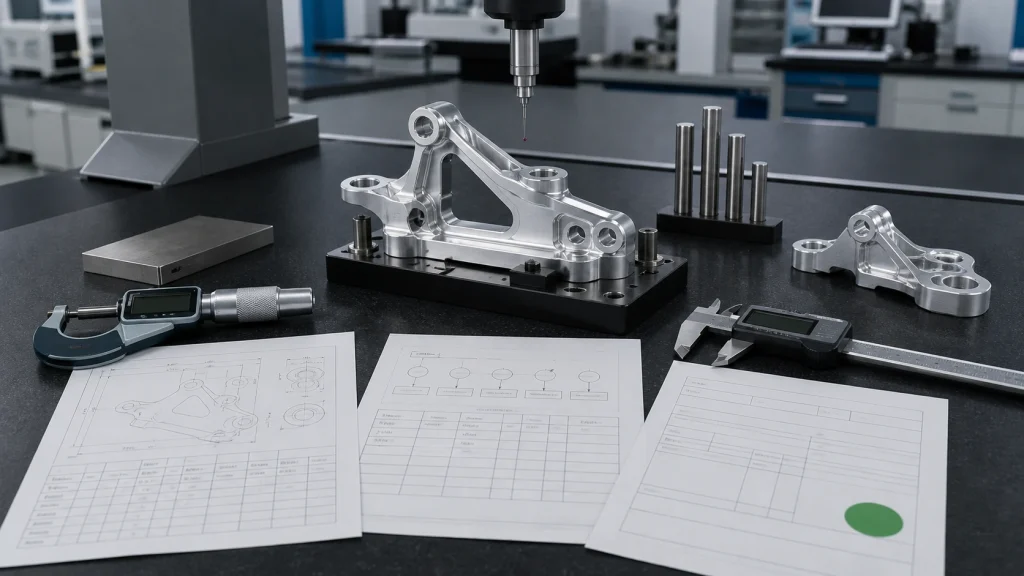
What PPAP Level 1 vs 3 vs 4 Actually Controls
The Production Part Approval Process provides evidence that parts made under production conditions can meet the engineering design record and specifications. PPAP submission levels then determine which evidence the supplier presents to the customer; they do not remove applicable planning, validation, testing, or record-retention work.
AIAG’s publicly accessible sub-tier supplier readiness checklist asks whether organizations complete all applicable PPAP elements for new or revised products and production processes, regardless of the submission level requested by the customer.
Four separate decisions therefore matter:
- Whether a PPAP element applies to the part
- Whether the supplier submits or retains the record
- Whether the customer requests samples or an on-site review
- Whether the customer approves, rejects, or grants interim approval
The difference matters because quality-system weaknesses frequently concern the same evidence used in PPAP. In IATF’s November 2024 global audit data, problem solving represented 10.07% of major nonconformities. Manufacturing-process design outputs represented 4.34%, control plans 3.13%, and measurement-system analysis 3.11%. These are certification-audit findings rather than PPAP rejection rates, yet they show why customers examine the evidence chain closely.
PPAP Level 1 vs 3 vs 4 at a Glance
The central question is which PPAP documents suppliers must submit. The following comparison separates standard submission scope from the records that may remain at the manufacturing location.
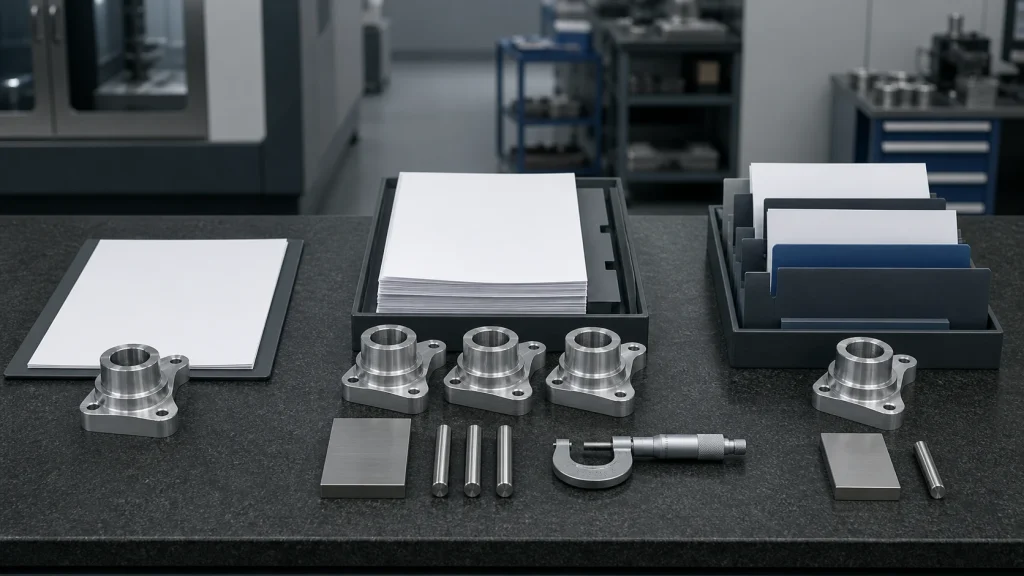
| Requirement | Level 1 | Level 3 | Level 4 |
|---|---|---|---|
| Part Submission Warrant | Submit | Submit | Submit |
| Appearance Approval Report | Submit for designated appearance items | Submit when applicable | Follow customer instructions |
| Production samples | Retain unless requested | Submit | Submit only if specified |
| Supporting evidence | Complete and retain applicable records | Submit the complete applicable package | Submit the customer-defined selection |
| Package structure | Minimum standard submission | Comprehensive standard submission | Customized submission |
| Primary risk | Assuming little preparation is required | Missing or inconsistent evidence | Assuming a universal checklist exists |
Level 3 serves as the AIAG default unless an authorized customer representative specifies another level. Level 4 has no fixed position in the hierarchy. A customer can request three selected records, a package similar to Level 3, or additional forms that make the submission more demanding.
Terms such as “complete package” still depend on applicability. A supplier without product-design responsibility may have no supplier-owned DFMEA. A non-appearance part may require no Appearance Approval Report. Each exclusion should have a documented reason rather than an empty folder.
PPAP Level 1 Requirements
The core PPAP Level 1 requirements call for the Part Submission Warrant, or PSW, to be submitted. A designated appearance item also requires the applicable Appearance Approval Report. Customer-specific instructions may add further evidence.
The PSW identifies the part, revision, manufacturing organization and location, submission reason, requested level, and submission results. Its authorization confirms that the responsible supplier representative has reviewed the applicable evidence and that the results satisfy customer requirements or have approved deviations.
Level 1 reduces the material transferred to the customer. The supplier still addresses applicable design records, process flow, PFMEA, control plan, MSA, dimensional results, test reports, initial process studies, laboratory evidence, samples, checking aids, and customer-specific requirements. Those records remain controlled and available according to the retention rules.
This distinction makes Level 1 suitable where the customer already understands the process, considers the submission lower risk, or wants a streamlined resubmission. The supplier should still be ready for a later document request, audit, engineering investigation, or change review.
Before sending the warrant, confirm the drawing revision, submission reason, material specification, production location, tooling identity, and status of every applicable result. A signed PSW cannot compensate for unresolved nonconformities.
PPAP Level 3 Checklist and Supporting Evidence
A PPAP Level 3 checklist covers the PSW, production samples, and complete applicable supporting data. Teams can organize the standard elements into four connected groups:
- Product definition: design record, authorized engineering changes, customer engineering approval, and DFMEA where applicable
- Process control: process flow diagram, PFMEA, control plan, and measurement-system studies
- Verification: dimensional results, material and performance tests, initial process studies, and qualified laboratory documentation
- Approval and reference: AAR, sample parts, master sample, checking aids, customer-specific records, and PSW
Reviewers expect consistency across these records. A special characteristic on the drawing should appear in the PFMEA, control plan, measurement plan, dimensional report, and capability study as applicable. Part numbers, engineering revisions, cavity or tool identification, sample quantities, and manufacturing dates should agree.
BOONA documented quality-control and inspection process illustrates the types of manufacturing evidence buyers may request, including dimensional inspection, CMM reports, material documentation, and performance records. The customer’s PPAP checklist still governs the final package.
Level 3 becomes difficult when departments create records independently. A cross-functional review should connect engineering, manufacturing, quality, purchasing, laboratories, and sub-tier evidence before anyone signs the warrant.
PPAP Level 4 Requirements Are Customer-Defined
The defining feature of PPAP Level 4 requirements is customer control. The standard package contains the PSW plus any other evidence the customer identifies. Samples, dimensional reports, capability studies, material declarations, sub-tier warrants, appearance records, or portal-specific workbooks enter the package only as directed.
A current OEM example shows how extensive that direction can become. The Volvo Group customer-specific requirements issued in February 2025 state that Level 4 applies to all components unless otherwise agreed. The same document requires capability studies for designated special or critical characteristics to use at least 30 pieces from the significant production run. It also specifies an IMDS timing requirement five weeks before C-build.
Those numbers belong to Volvo’s system. Suppliers should never copy them into an unrelated customer package as universal PPAP rules.
Level 4 can be narrower, comparable to, or broader than Level 3. The RFQ or quality agreement should identify every required record, sample quantity, production stream, file format, portal field, approver, and retention obligation.
💡 Pro Tip: Convert every Level 4 request into a signed submission matrix. Include columns for applicability, submit or retain status, owner, revision, due date, and customer approval.
How Customers Choose the Submission Level
The customer’s authorized representative selects the level, often with input from supplier quality, engineering, purchasing, and regulatory teams. The decision may reflect part criticality, process maturity, supplier history, design responsibility, tooling status, and the reason for submission.
A new safety-related component from a new manufacturing line may receive a comprehensive requirement. A minor engineering change with established evidence may justify Level 1. Another customer may use Level 4 as its normal workflow because its portal and supplier manual define a tailored package.
Events that can trigger submission or resubmission include:
- A new part or supplier
- Engineering changes affecting fit, form, function, or performance
- A new or transferred manufacturing location
- Tooling replacement, transfer, or major refurbishment
- Material or process changes
- Changes involving sub-tier suppliers
- Correction of a previous submission discrepancy
- Long periods of inactive production, where customer rules apply
Submission level and approval status remain separate. Level 3 describes the evidence presented. Approved, interim approval, and rejected describe the customer’s decision. Production shipment should begin only under the customer’s authorized status and conditions.
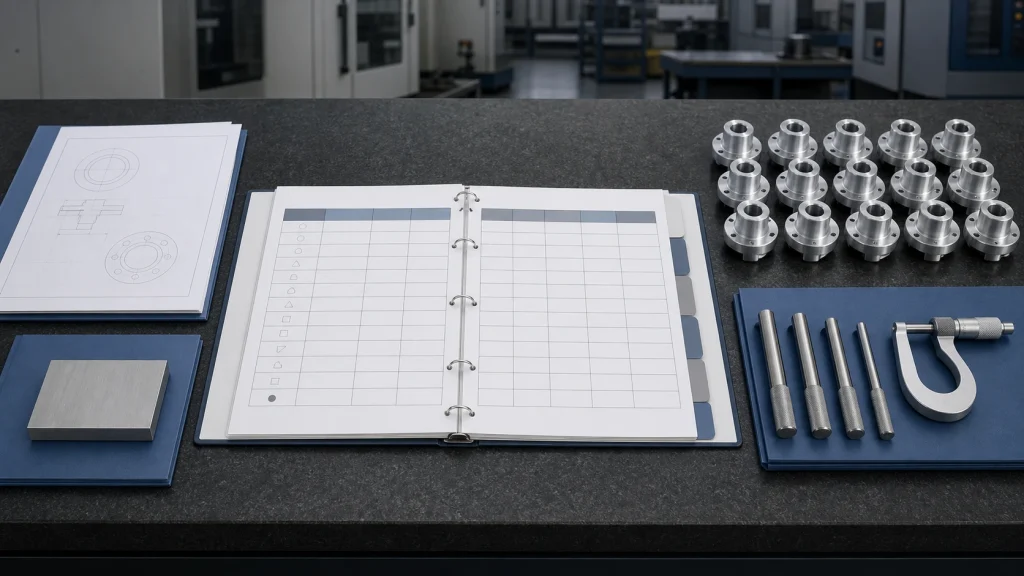
How to Build PPAP Level 1 vs 3 vs 4 Correctly
A disciplined workflow prevents most package errors.
1. Freeze the governing inputs
Confirm the drawing revision, specifications, engineering changes, purchase order, submission reason, customer manual, and requested level. Resolve conflicts before the production run.
2. Create an applicability matrix
List every PPAP element and assign its owner, status, revision, submission requirement, and retention location. Record the rationale for each non-applicable item.
3. Plan the production evidence
Samples and data should represent the intended material, tooling, operators, equipment, gauges, process settings, and production location. BOONA low-volume manufacturing services can support pilot and production-intent parts, while the customer determines whether the run satisfies its PPAP criteria.
4. Connect the records
Cross-check the drawing, process flow, PFMEA, control plan, MSA, inspection report, material results, capability studies, samples, and PSW. One revision error can undermine an otherwise complete package.
5. Review before authorization
Verify that every result conforms or has a documented customer-approved deviation. Confirm file names, portal fields, sample identification, and required signatures.
6. Control the submitted baseline
Archive exactly what the customer received. Record its status and prevent informal document replacements from creating competing versions.
Published Application Example: Electric-Motor Armature Quality
A published manufacturing case demonstrates why linked process evidence matters. This was an academic industrial study rather than a BOONA customer project, and it did not evaluate PPAP submission levels directly.
The 2024 Applied Sciences case study of an automotive electric-motor armature line analyzed 1,173,538 units produced from January through September 2022. Average scrap reached 2.92%, compared with the plant’s 0.7% target. The distinctive failure mode involved hipot insulation failures associated with contact between wire and laminations, epoxy-coating issues, and sharp lamination edges.
The team used a PDCA-based investigation, revised process controls, and updated the control plan and PFMEA. After implementation, performance moved beyond the 0.7% scrap target, and the researchers estimated annual material-cost savings of approximately US$135,000.
These results cannot predict savings for another factory. They show how a technical change must propagate through risk analysis, process controls, inspection, and documented evidence. During PPAP, disconnected records create doubt about whether the approved process reflects the actual corrective action. A coherent evidence chain gives the customer a clearer basis for approval.
Common Submission Errors and RFQ Controls
Recurring problems usually begin before the package reaches the customer:
- Treating Level 1 as permission to leave applicable evidence unfinished
- Building Level 4 from an assumed template
- Omitting samples from Level 3
- Mixing drawing, PFMEA, control-plan, or test-report revisions
- Collecting data from prototype tooling instead of the intended process
- Using capability results from an unsuitable measurement system
- Leaving special characteristics disconnected across records
- Marking an element non-applicable without an explanation
- Missing customer forms, sub-tier evidence, or portal fields
- Signing the PSW while results remain unresolved
The RFQ should define the requested level, sample quantity, cavities or production streams, dimensional-layout scope, testing, MSA, capability requirements, laboratory qualifications, material reporting, packaging evidence, file format, and approval portal.
Quality effort affects price and schedule. A Level 3 package covering multiple tools and special characteristics requires more planning than a Level 1 warrant submission. Level 4 cannot be quoted accurately until the customer provides its checklist.
A short clarification during sourcing costs far less than repeating a production run because the submitted evidence came from the wrong revision, tool, material lot, or process condition.
FAQs
What is the difference between PPAP Level 1, Level 3, and Level 4?
Level 1 submits the PSW and applicable appearance approval. Level 3 submits samples and complete applicable supporting data. Level 4 submits the PSW plus the specific evidence defined by the customer.
Does Level 1 mean the supplier only prepares a PSW?
No. The supplier must address and retain applicable PPAP evidence. Level 1 primarily reduces what goes to the customer.
Is PPAP Level 3 always the default?
AIAG treats Level 3 as the default unless the authorized customer representative specifies another level. Customer-specific requirements can establish a different normal package.
Does Level 4 require all 18 PPAP elements?
Only when the customer’s written instructions require them. Level 4 has no universal checklist, and individual elements may also be inapplicable to a particular part.
Are samples required for Level 4?
Samples enter a Level 4 submission when the customer requests them. The supplier should confirm quantity, identification, cavities, tools, and delivery method.
Can a customer change the PPAP level after quoting?
Yes, if contract and customer procedures permit the change. Suppliers should document the revised scope and assess its effect on testing, samples, cost, and timing before proceeding.
Conclusion
PPAP Level 1 vs 3 vs 4 becomes manageable once teams separate applicable evidence from submission scope. Level 1 sends the warrant and applicable appearance approval. Level 3 sends samples and the complete applicable package. Level 4 follows a written customer-defined matrix.
Before producing samples, confirm the level, drawing revision, submission reason, customer-specific rules, sample plan, production conditions, and portal format. Then connect the design record, PFMEA, control plan, measurement system, inspection data, capability results, and PSW into one controlled baseline.
If your program requires production-intent machined parts and controlled inspection documentation, send BOONA the CAD model, drawing, material specification, quantity, PPAP level, and customer checklist. The team can review manufacturability and inspection requirements through its precision CNC machining services. Send your RFQ to begin the technical review.