
In high-power electrical engineering, selecting the wrong copper grade doesn’t just reduce efficiency; it can lead to catastrophic component failure. Over my two decades in precision manufacturing, drawing heavily on my background in Mechatronics Engineering, I’ve seen firsthand the consequences of prioritizing minor cost savings over metallurgical suitability.
When procurement teams or design engineers reach out to our team at BOONA Prototypes here in Shenzhen, the conversation almost always centers on one critical choice: C101 versus C110.
Both are exceptional conductors, but they behave very differently under a cutting tool and in extreme operational environments. If you are developing EV battery cold plates, high-frequency RF connectors, or specialized grounding hardware, here is your definitive guide to CNC machining C101 vs C110 copper for electrical parts.
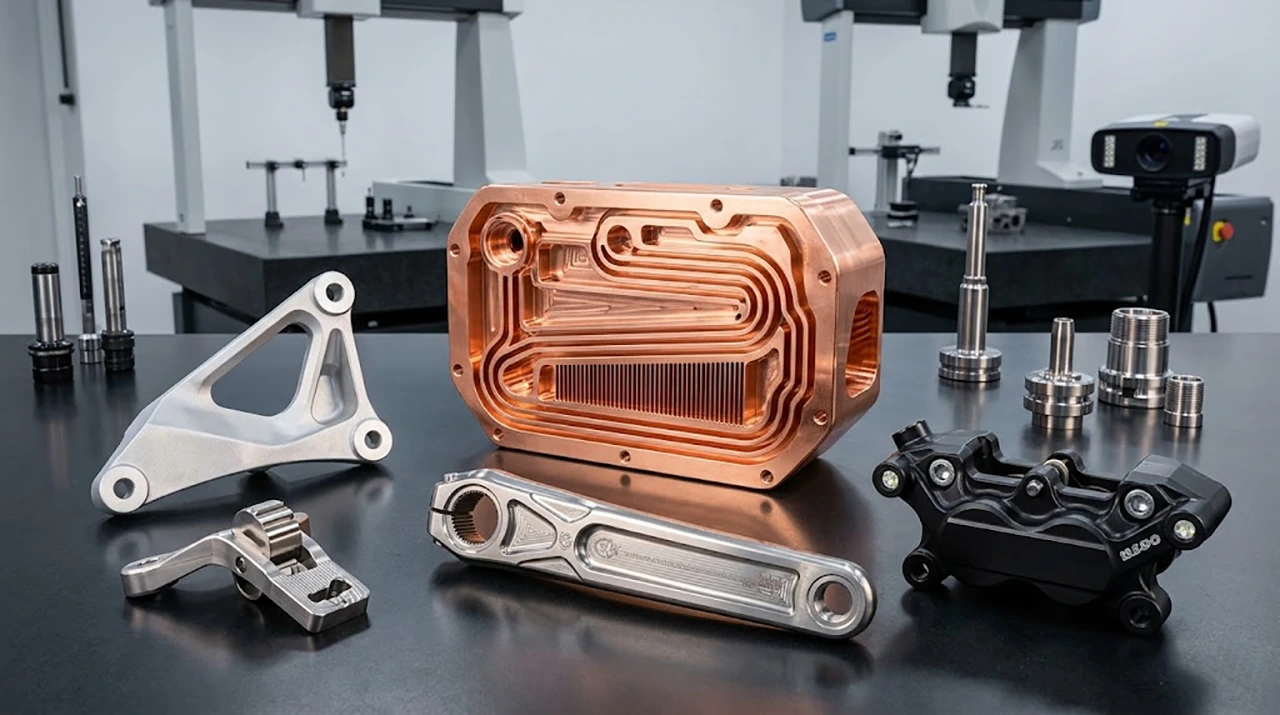
Material Chemistry: The Oxygen Factor
The fundamental difference between these two grades lies in their refining process and the presence of oxygen.
-
C11000 (Electrolytic Tough Pitch – ETP): This is the industry standard for custom electrical busbars and general power transmission. It contains 99.90% pure copper with trace amounts of oxygen. It guarantees a minimum of 100% IACS conductivity.
-
C10100 (Oxygen-Free Electronic – OFE): This is the premium, vacuum-refined choice. It boasts an ultra-high purity of 99.99% copper with strictly zero oxygen content.
The Threat of Hydrogen Embrittlement: If your electrical component will be exposed to high heat in a reducing atmosphere (such as vacuum brazing or welding), you must specify machining C101 oxygen-free copper. If you use C110, the oxygen within the metal will react with hydrogen at high temperatures, creating steam pockets inside the copper that cause it to blister, crack, and fail catastrophically.
The Shop Floor Reality: Machinability Challenges
Regardless of the grade, custom CNC machining for pure copper is notoriously difficult. Neither C101 nor C110 chips cleanly like aluminum or brass. They are extremely ductile and “gummy.”
However, there is a slight difference on the shop floor:
-
Machining C110: The microscopic oxygen inclusions in ETP copper actually provide a slight break in the chip structure. While still very gummy, it is marginally easier to machine than its oxygen-free counterpart.
-
Machining C101: Because it is 99.99% pure, C101 is the ultimate test of a machinist’s skill. It is highly prone to rapid work-hardening and “built-up edge” (BUE), where the copper literally welds itself to the flutes of the cutting tool.
To achieve the tight tolerances required for high-end precision copper machined components, we must use specialized, ultra-sharp uncoated carbide or DLC-coated tools, combined with aggressive high-pressure flood coolant.
Technical Comparison & Cost Impact
The cost difference between a C101 and a C110 part is driven by both raw material premiums and the slower machining feeds required for higher purity.
C101 vs. C110 Engineering Reference Table
| Property/Parameter | C10100 (OFE) | C11000 (ETP) | Design Impact |
| Purity | 99.99% Min | 99.90% Min | Higher purity equals higher ductility (harder to machine). |
| Conductivity (IACS) | 101% Min | 100% – 101% | Both offer elite electrical performance. |
| Brazing / Welding | Excellent | Poor (Risk of cracking) | Use C101 for any high-heat joining processes. |
| Material Cost | Premium (High) | Standard (Moderate) | C101 is significantly more expensive per kg. |
| Primary Applications | Vacuum tubes, MRI parts, accelerators. | Busbars, grounding strips, standard heat sinks. |
Design for Manufacturability (DFM) for Copper Parts
You can engineer costs out of your project by optimizing your CAD files for the realities of copper machining. When submitting designs to our CNC Machining Service:
-
Specify Form Taps: Never use standard cut taps for threaded holes in pure copper; the threads will tear. Always specify “roll” or “form” taps for strong, reliable electrical connections.
-
Open Up Internal Radii: Soft copper creates long, stringy chips. Larger internal corner radii allow us to use stiffer, larger end mills that evacuate chips effectively without chattering.
-
Plan for Surface Finishing: Bare copper oxidizes rapidly, increasing surface resistance. Protect your custom copper heat sinks manufacturing investment by specifying electroless nickel plating, silver plating, or specialized passivation.
Partnering with Precision Experts
The choice between C101 and C110 dictates your product’s reliability and your project’s budget. Successfully manufacturing these critical components requires a factory that understands both the metallurgy and the exact CNC parameters required to tame these gummy metals.
If you have a complex electrical component in development, contact the engineering team at BOONA today. Submit your drawings, and let’s ensure you get the exact performance you engineered.
FAQs
Is there a noticeable difference in electrical conductivity between C101 and C110?
In practical terms, the difference in conductivity is minimal. C110 (ETP) offers an electrical conductivity of 100% to 101% IACS, while C101 (OFE) guarantees a minimum of 101% IACS. For standard custom electrical busbars and power distribution, C110 is more than sufficient. C101 is chosen for its high purity (99.99%) and lack of oxygen, rather than a massive jump in conductivity.
Why do machine shops charge more to machine C101 than C110?
The higher cost is due to both raw material pricing and machinability. C101 undergoes an expensive oxygen-free refining process, making the raw billet more costly. Additionally, because C101 lacks the microscopic oxygen inclusions found in C110, it is even more ductile and “gummy.” This requires slower CNC cutting feeds, increases tool wear, and raises the overall cost of custom CNC machining for pure copper.
Can I braze or weld C110 copper components?
It is highly discouraged to weld or braze C110 copper if the process involves high temperatures in a reducing (hydrogen-rich) environment. The oxygen in C110 reacts with the hydrogen to form steam, causing the metal to blister and crack—a phenomenon known as hydrogen embrittlement. For any components requiring high-heat joining, machining C101 oxygen-free copper is the only safe engineering choice.
When should I strictly specify C101 (OFE) copper?
You should pay the premium for C101 when manufacturing parts for ultra-high vacuum (UHV) environments, medical imaging equipment (like MRI scanners), particle accelerators, microwave tubes, and sensitive aerospace electronics. In these applications, the outgassing of oxygen or impurities from standard C110 would cause system failures.
How do I prevent my machined copper electrical parts from oxidizing?
Bare copper reacts with oxygen in the air, forming a tarnish that can increase surface electrical resistance over time. To protect your precision copper machined components and maintain optimal conductivity at the contact points, we highly recommend post-machining surface treatments such as silver plating, tin plating, or electroless nickel plating.
What is the most common design mistake for machined copper parts?
The most frequent Design for Manufacturability (DFM) error is specifying standard “cut” threads for tapped holes. Because copper is so soft, standard cutting taps easily tear the threads. Always specify “form taps” or “roll taps” on your CAD drawings. This method presses and displaces the metal to form the thread, resulting in a much stronger connection without generating internal copper chips.