
Walk onto any shop floor trying to machine pure tungsten, and you feel the tension immediately. Tungsten is incredibly dense and boasts the highest melting point of all metals, making it perfect for aerospace ballast, medical radiation shielding, and semiconductor components. But the brutal reality of the shop floor is this: at room temperature, pure tungsten has virtually zero ductility.
It doesn’t act like titanium or stainless steel; it behaves more like glass or ceramic. If the machining strategy is off by even a fraction, it doesn’t bend—it shatters, chips, and develops deep, fatal micro-cracks.
In over two decades of high-end manufacturing at BOONA, we have seen far too much expensive material scrapped because shops failed to handle this “glass-like” metal. If you are looking for a custom tungsten parts manufacturer who truly understands the material, here is the unfiltered shop-floor reality of how we completely eliminate edge chipping in our tungsten CNC services.
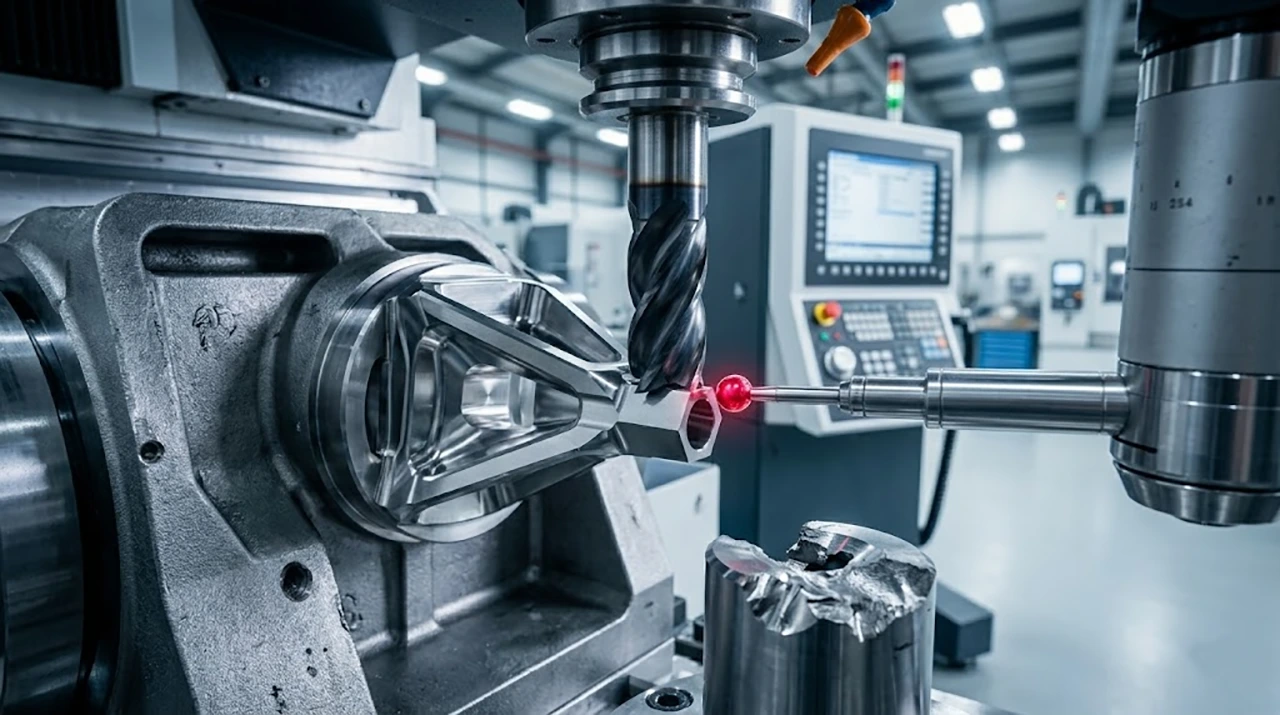
Why Standard Shops Scrap Your Tungsten Parts
Standard machine shops rely on plastic deformation—creating a continuous chip—to remove metal. But tungsten resists this deformation. When a standard milling cutter hits pure tungsten, it isn’t “cutting”; it is physically “tearing” the material’s grains out.
This tearing leads to severe edge chipping. Even more dangerously, it leaves microscopic fractures hidden beneath the machined surface. Under high-stress operational conditions in aerospace or medical devices, these micro-cracks propagate rapidly, leading to catastrophic structural failure.
The Absolute Prerequisite: Extreme System Rigidity
To achieve zero micro-crack tungsten part machining, you cannot use a lightweight machine tool. Vibration is the ultimate killer of brittle materials.
We only run tungsten on ultra-rigid, heavy-cast iron, box-way CNC machining centers. Furthermore, traditional vise clamping creates localized stress points that can easily crush a tungsten part. We utilize custom 3D soft jaws, full-surface enveloping workholding, and potting techniques to completely absorb harmonic vibrations, ensuring the part is dead-solid during the cut.
CAM Strategies and The Anti-Fracture Parameter Matrix
When machining tungsten, the exact moment the tool enters or exits the material is the ultimate “danger zone” for chipping. Here are the core parameters our programmers use to guarantee a near-100% yield rate:
| Machining Variable | The “Standard Shop” Mistake | Our Shop-Floor Standard | Why It Prevents Cracking |
| Tool Entry/Exit | Straight plunging or forcing into the cut. | Roll-in / Roll-out Arcs | Straight entry creates shock loads that shatter the edge. Arc paths smoothly load and unload the cutting pressure. |
| Rake Angle | Sharp positive rake (used for cutting soft aluminum). | Negative Rake Angle | A negative rake directs the cutting force down into the solid mass of the part, rather than pulling up on the fragile edge, preventing material peeling. |
| Radial Engagement (Ae) | 20% – 30% traditional milling step-overs. | Under 5% Micro-stepping Dynamic Milling | A microscopic step-over means the tool only takes “dust-like” bites, ensuring cutting forces never exceed the material’s inherent compressive strength. |
| Tooling Material & Coating | Standard AlTiN coated carbide endmills. | Sub-micron grain solid carbide & CVD Diamond Coatings | Tungsten is highly abrasive and will dull standard tools instantly. A dull tool rubs and crushes rather than cuts, instantly fracturing the part. |
Thermal Shock Management: The Coolant Dilemma
Tungsten is not only brittle but also highly susceptible to thermal shock. During machining, tool temperatures spike dramatically. If a blast of ice-cold, intermittent coolant hits the hot part, the violent thermal contraction acts exactly like dropping a hot glass into ice water—the part will instantly crack internally.
To prevent thermal shock ruining the part, we tailor the coolant strategy to the specific geometry: we either utilize massive, continuous, and steady flood coolant (to keep temperatures flawlessly uniform), or we run completely dry with a high-pressure air blast (strictly to clear away the abrasive tungsten dust).
Knowing When to Stop Milling and Use EDM
This is the key difference between an experienced manufacturer and a novice: honest Design for Manufacturability (DFM) assessment.
Certain features in pure tungsten (like extremely thin, deep walls or sharp internal corners) are physically impossible to CNC mill without inducing cracks. For these high-risk geometries, we strictly mandate the use of Wire EDM (Electrical Discharge Machining) or Sinker EDM. EDM is a non-contact process that exerts absolutely zero mechanical cutting force on the material, perfectly preserving the integrity of the grain structure.
Stop Subsidizing Your Supplier’s Learning Curve
Successfully machining pure tungsten and heavy tungsten alloys requires deep metallurgical knowledge, incredibly rigid equipment, and a refusal to compromise on process discipline. This is not a material for beginners to learn on.
If you are tired of delayed deliveries due to high scrap rates, or if you lose sleep over hidden micro-cracks threatening your product’s safety, it is time to check out our Custom CNC Machining Services.
Don’t let brittle edges stall your R&D timeline. Send your complex 3D CAD and STEP files to the engineering team at BOONA today, and we will provide a free Design for Manufacturability (DFM) review and a reliable, zero-scrap quote within hours.
FAQs
Why are quotes for tungsten machining so much higher than titanium or stainless steel?
You are paying for extreme tooling consumption and specialized machine time. It isn’t just that the raw material is expensive. Tungsten is highly abrasive and destroys standard carbide endmills in minutes. We have to utilize premium sub-micron carbide and diamond-coated tooling, and we have to run at micro-step feed rates to prevent the material from shattering. A suspiciously cheap quote usually means the shop hasn’t realized what they are up against yet.
My previous supplier clamped my tungsten parts in a vise, and they cracked before the machine even started. Why?
Traditional vise clamping creates localized, high-pressure “pinch points.” Because pure tungsten has virtually zero ductility at room temperature, it cannot bend or yield to absorb that focused pressure—it simply snaps. We prevent this by utilizing custom-machined 3D soft jaws, full-surface enveloping workholding, and specialized potting compounds to distribute the clamping force completely evenly across the entire part.
How can I verify that my machined tungsten parts don’t have hidden micro-cracks beneath the surface?
A standard visual inspection is never enough for mission-critical tungsten components. Micro-cracks can be entirely invisible to the naked eye. For high-stress aerospace or medical applications, we strongly recommend Fluorescent Penetrant Inspection (FPI) or ultrasonic testing to guarantee absolute structural integrity beneath the machined surface.
Is it better to machine tungsten dry or with coolant? I’ve heard conflicting advice.
The goal is to avoid thermal shock. If a hot tungsten part is hit with a sudden, intermittent splash of cold coolant, it will fracture internally. Depending on the exact geometry, we use one of two extremes: either massive, continuous high-pressure flood coolant to keep the temperature completely uniform from start to finish, or we run completely dry with a high-velocity air blast specifically to clear away the abrasive tungsten dust. There is no middle ground.
At what point should I design a feature for EDM instead of standard CNC milling?
If your design requires very deep, thin walls (under 1mm thick) or sharp internal corners, CNC milling is a massive risk and almost guarantees corner chipping. For those specific geometries, we mandate the use of Wire or Sinker EDM. Because EDM uses electrical discharge rather than mechanical cutting force, it puts absolutely zero physical stress on the brittle tungsten, preserving the delicate features perfectly.